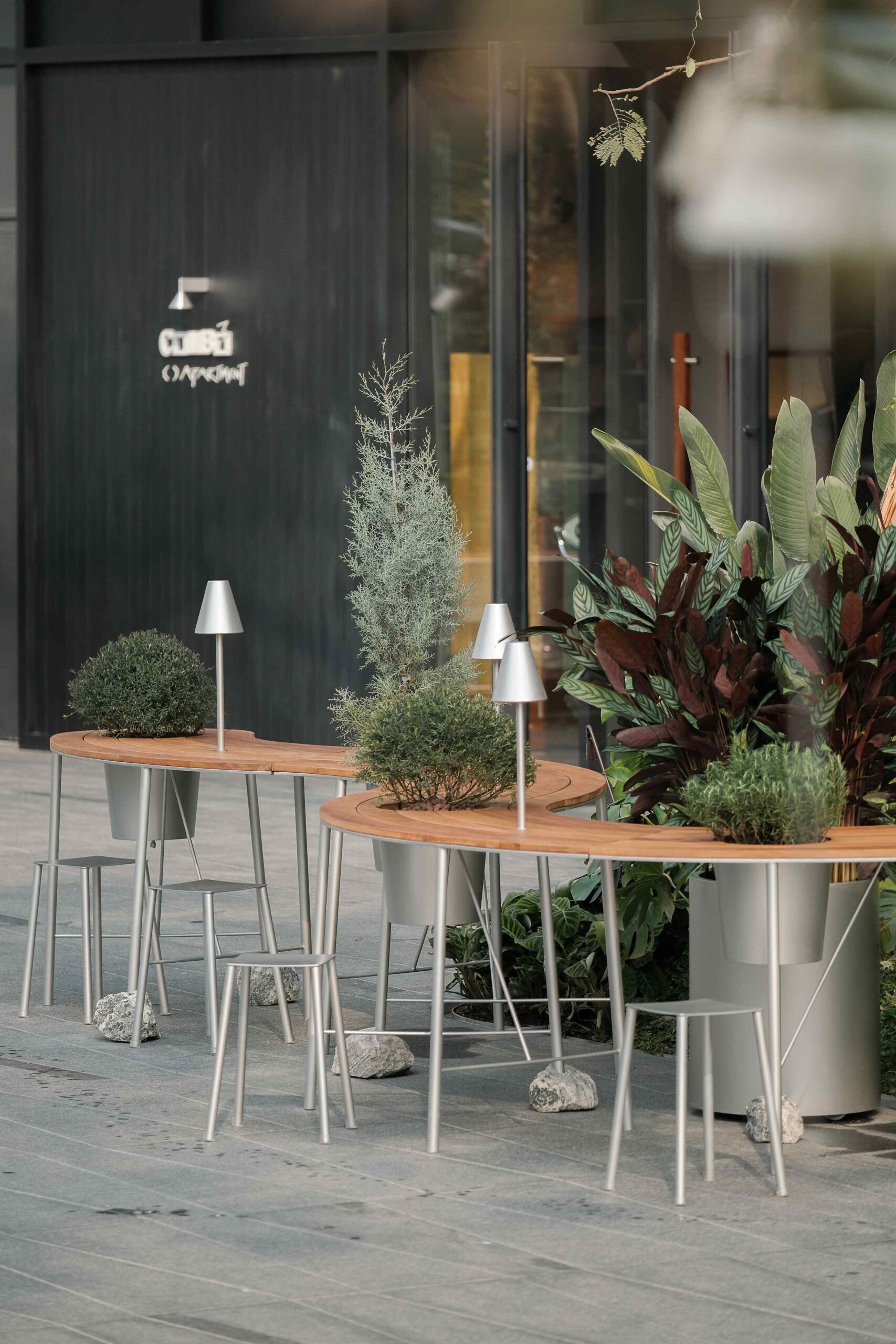
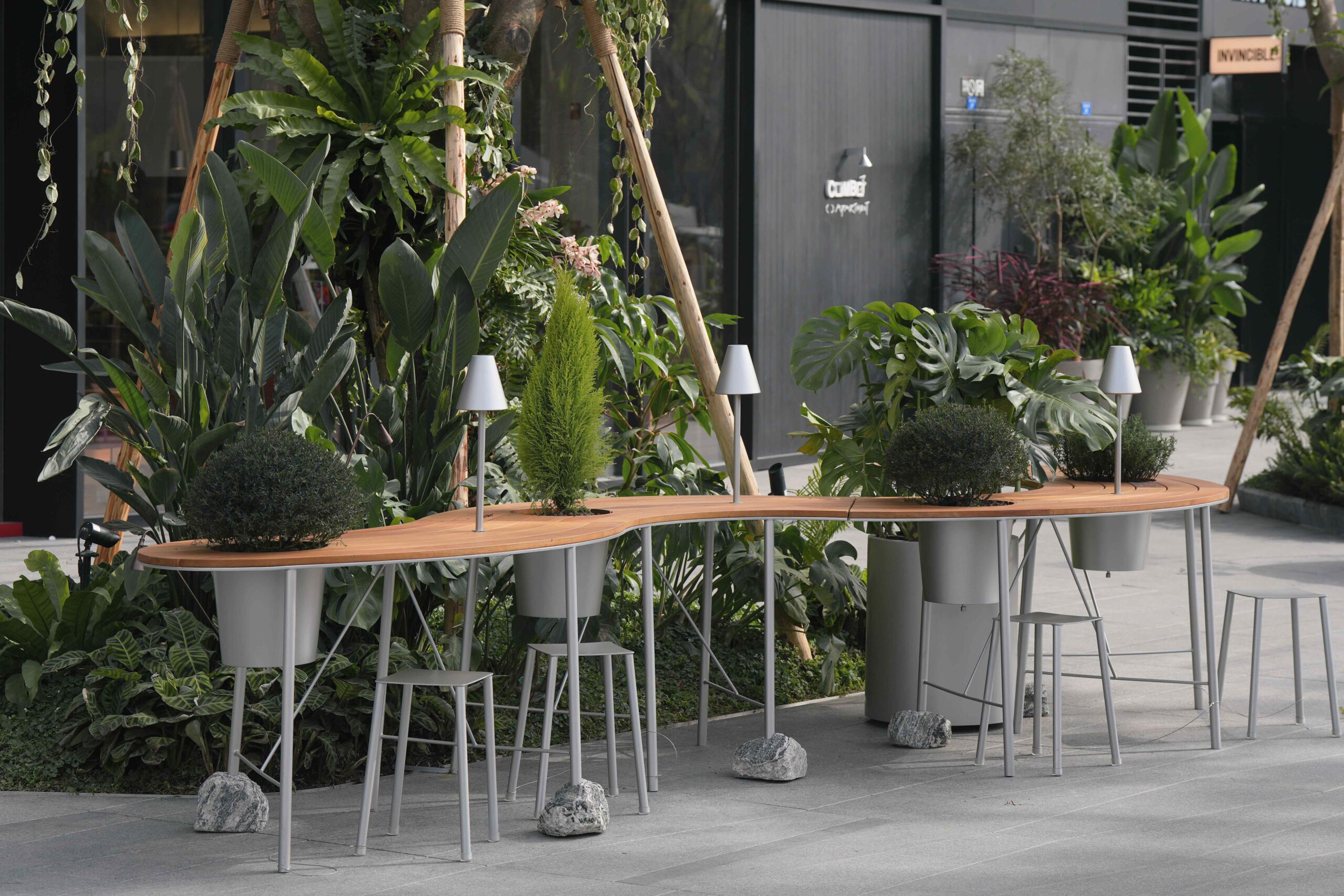
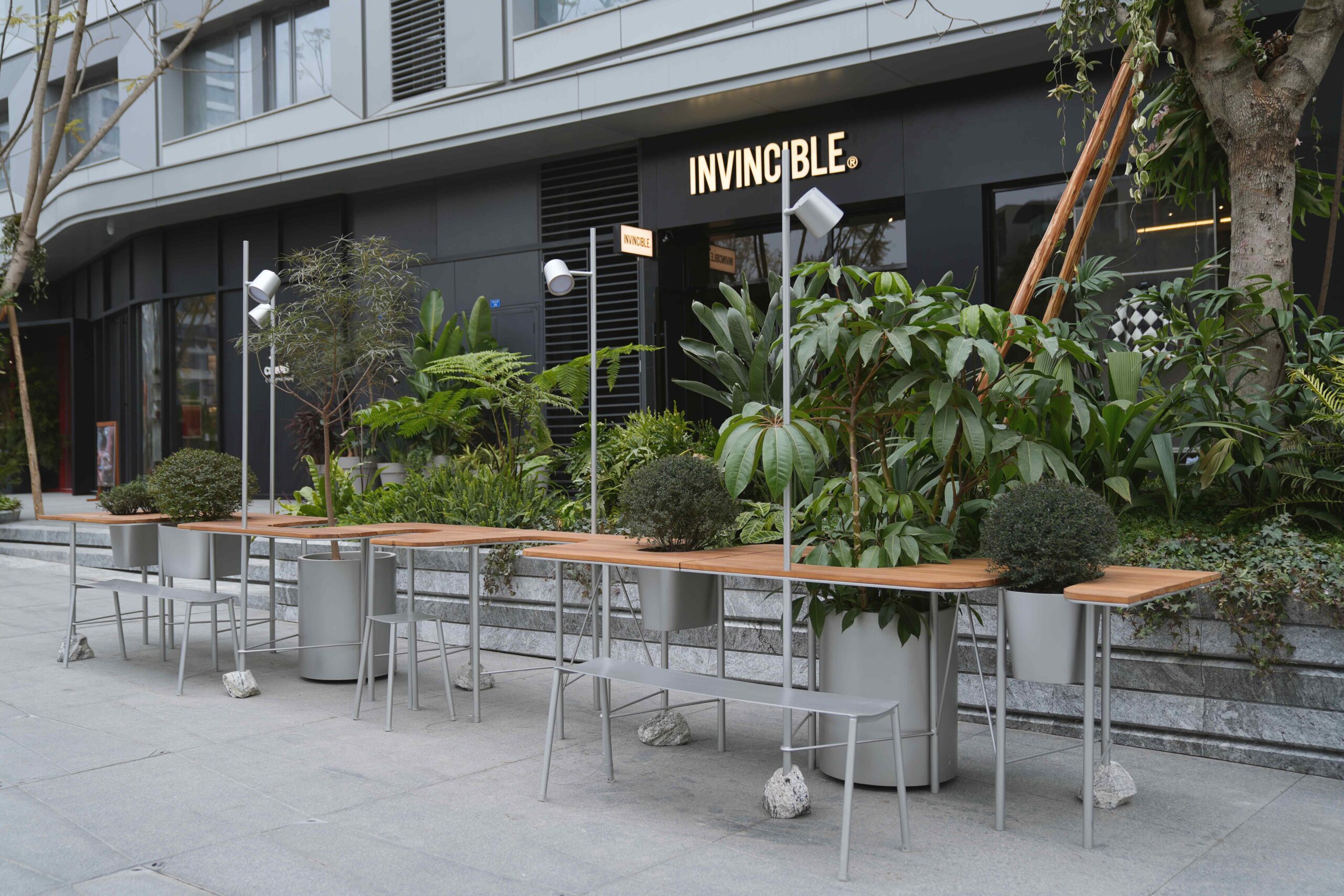
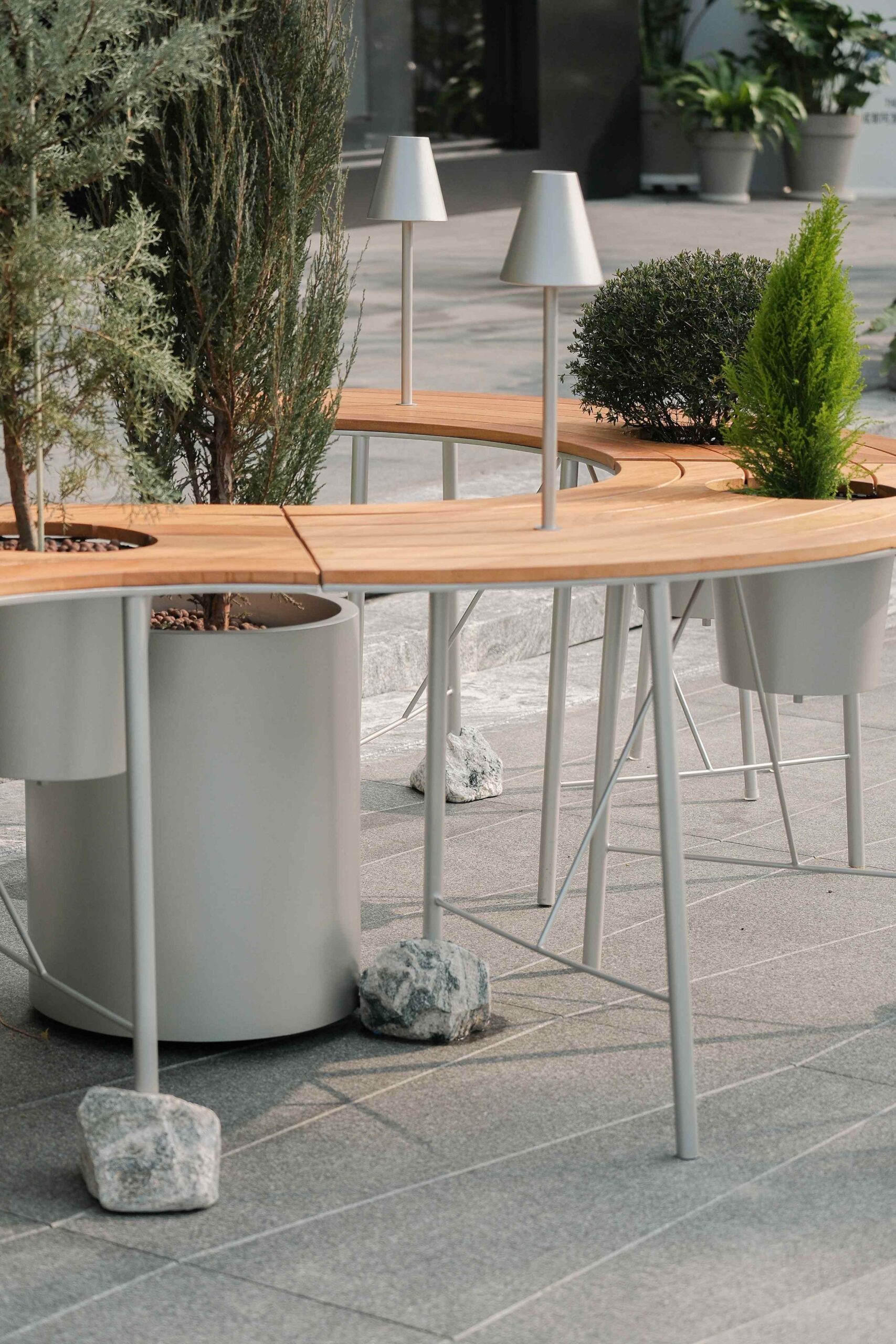
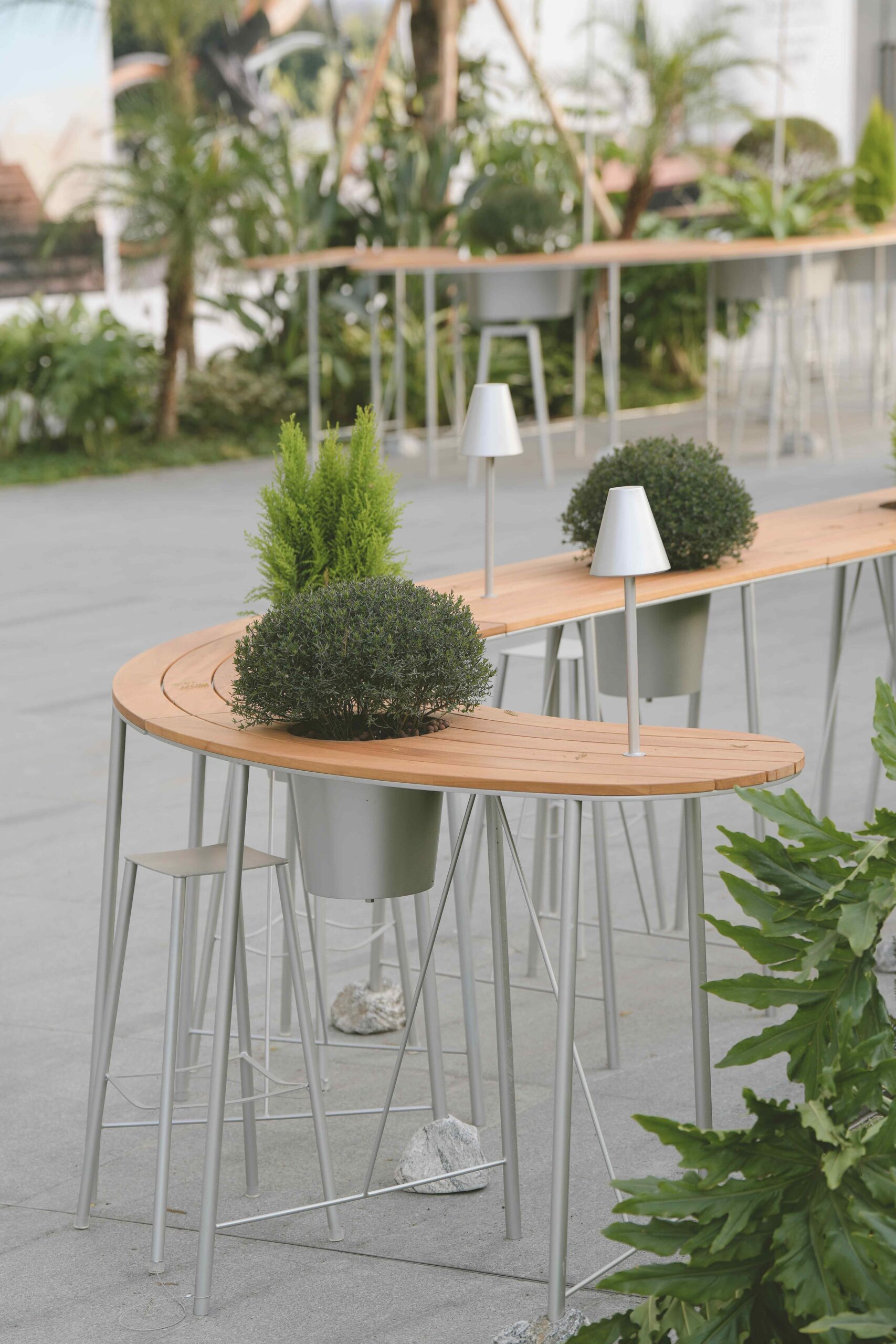
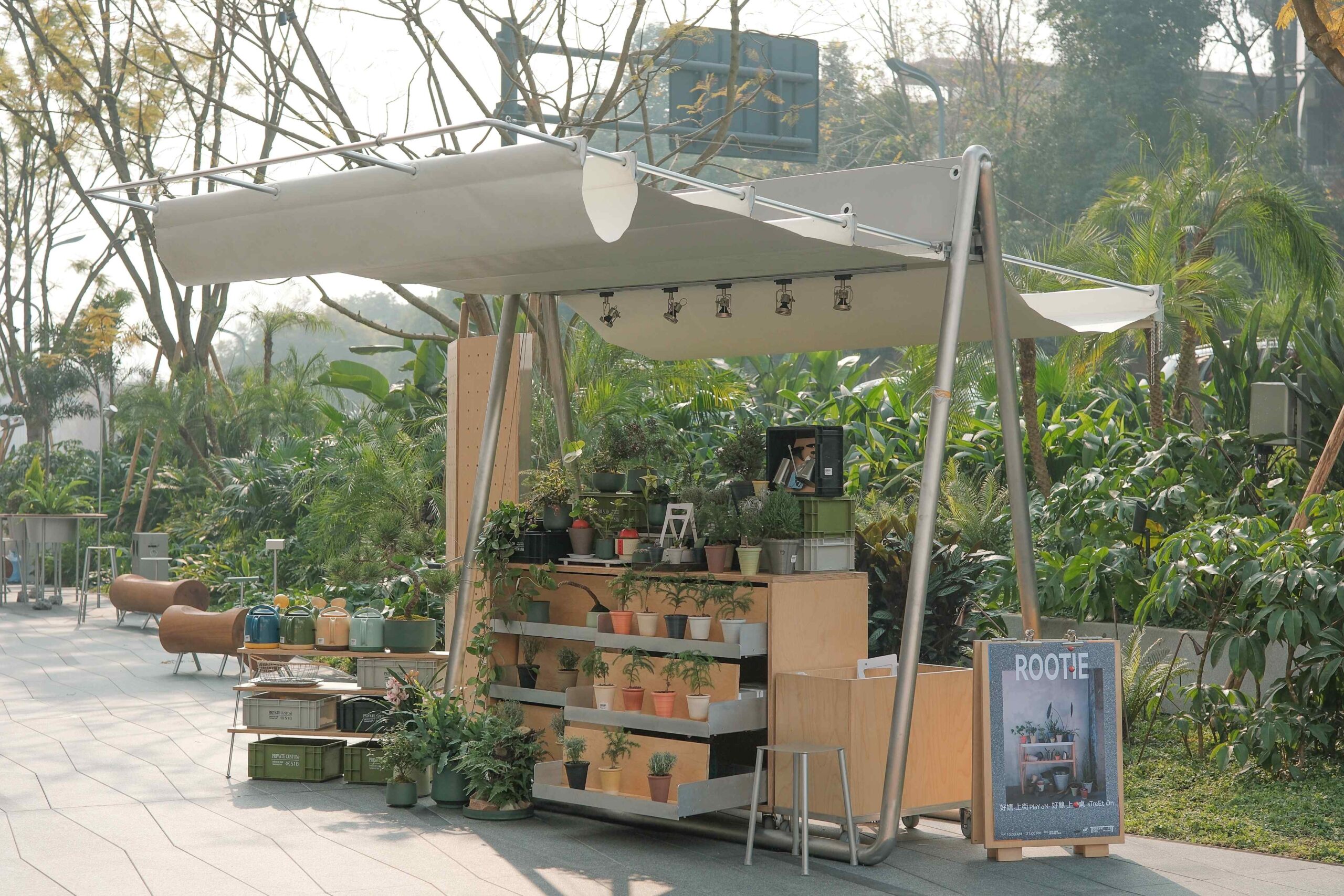
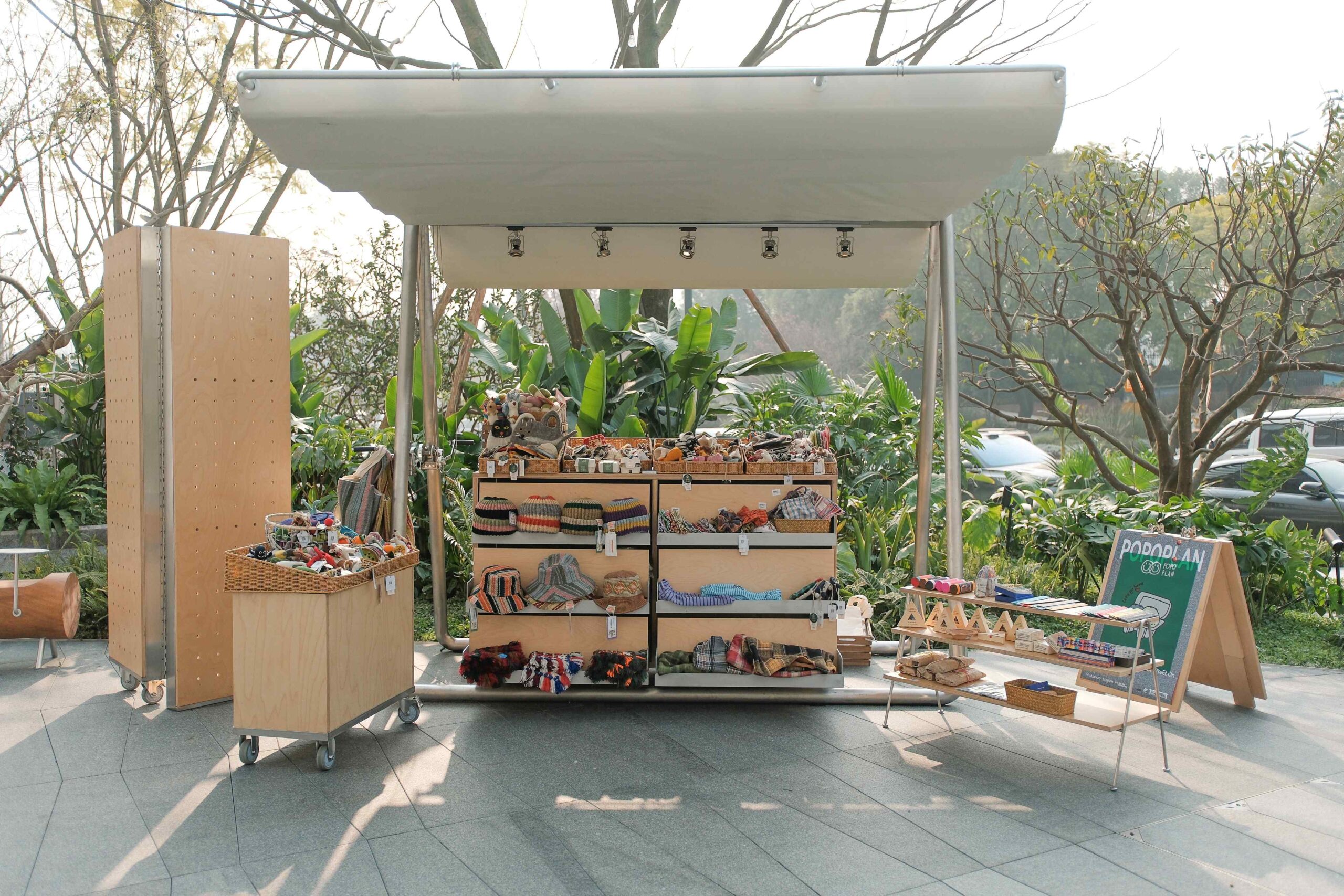
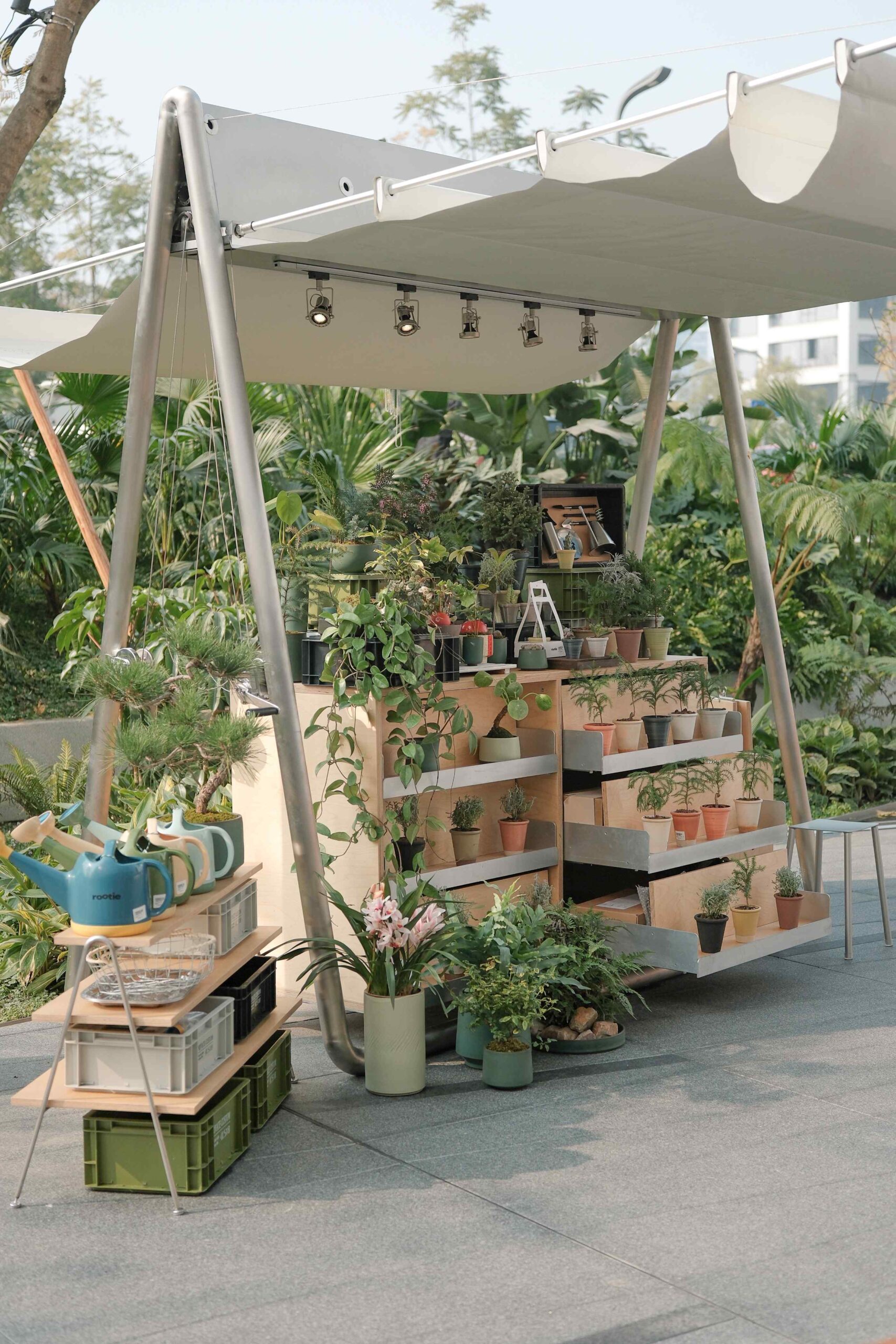
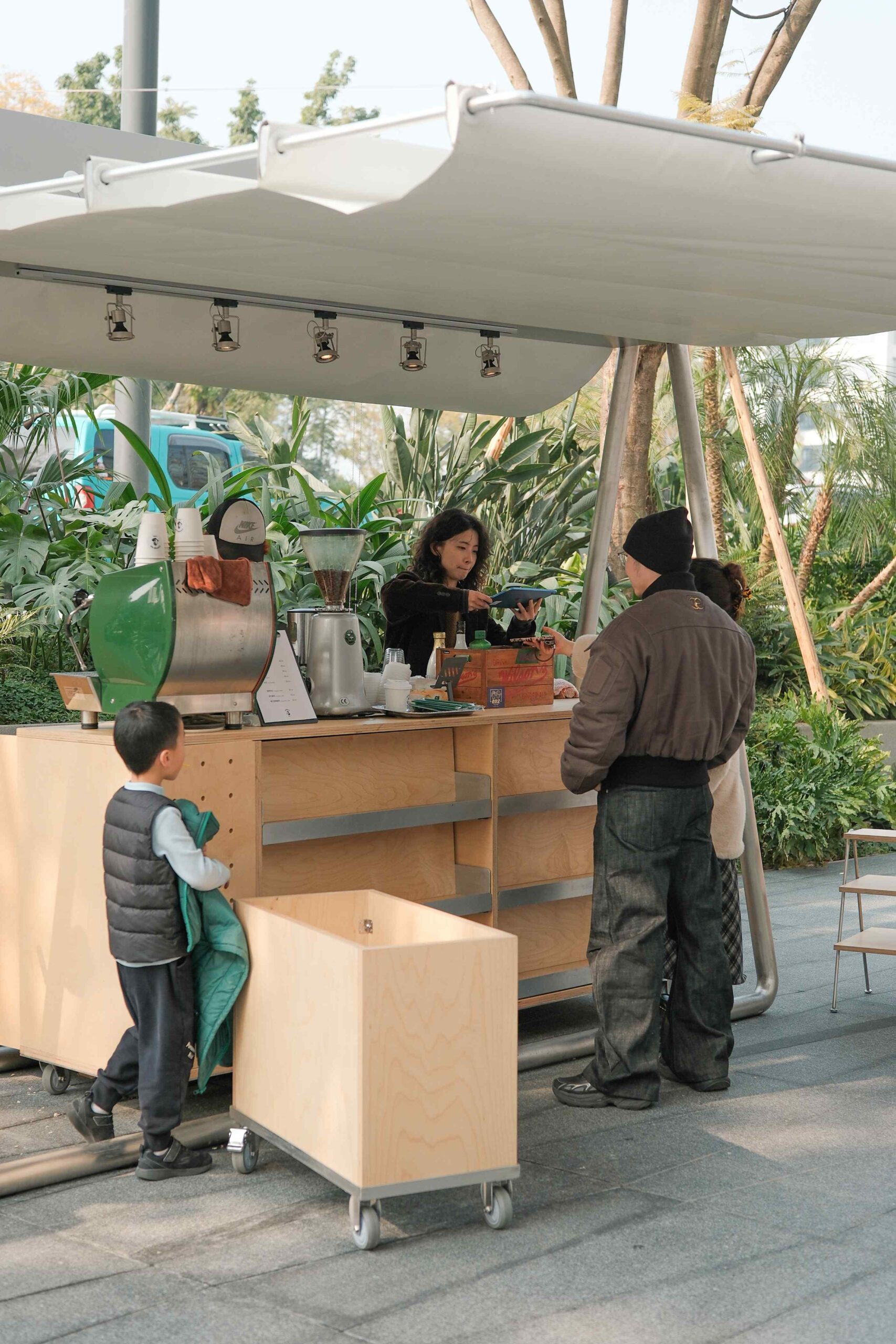
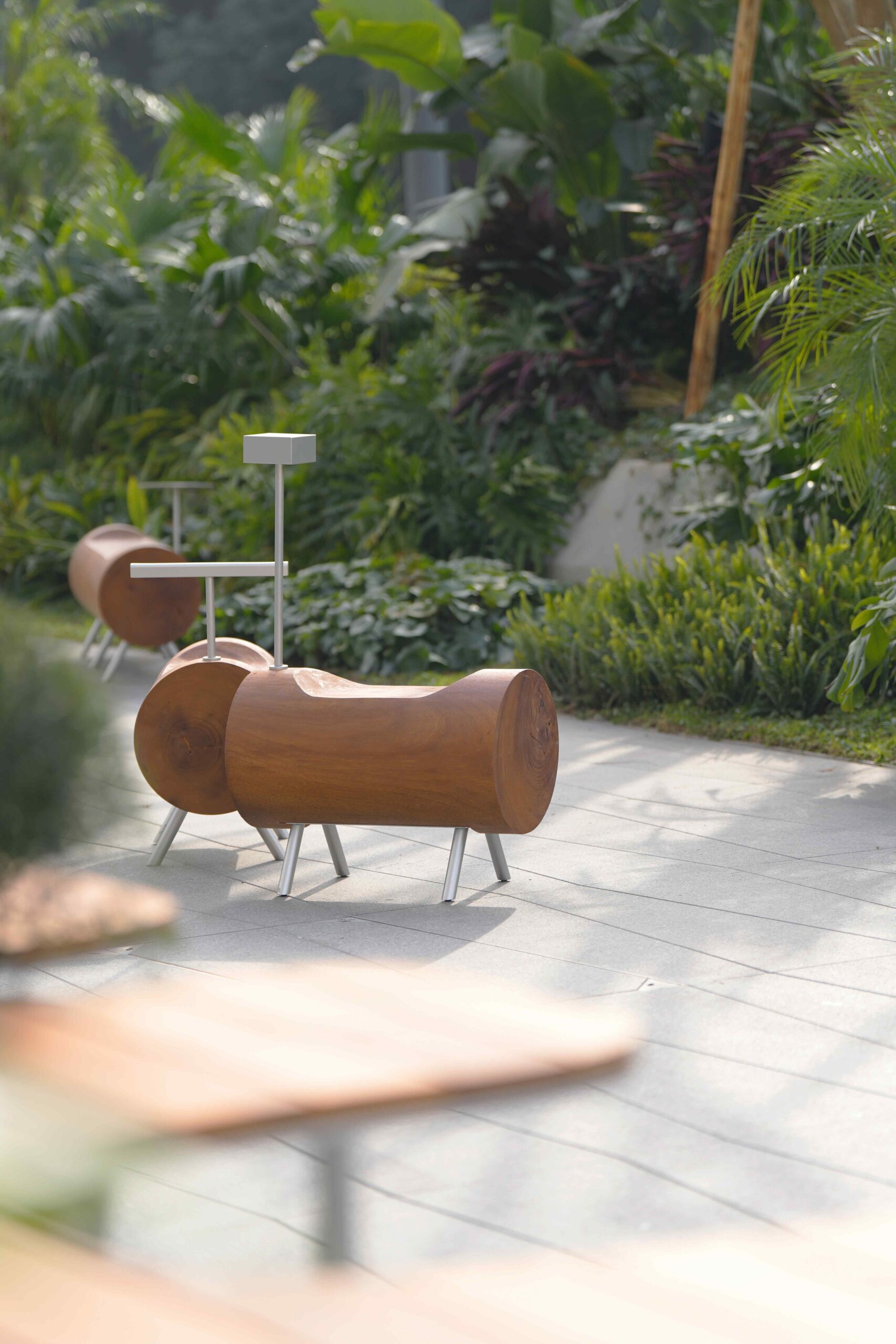
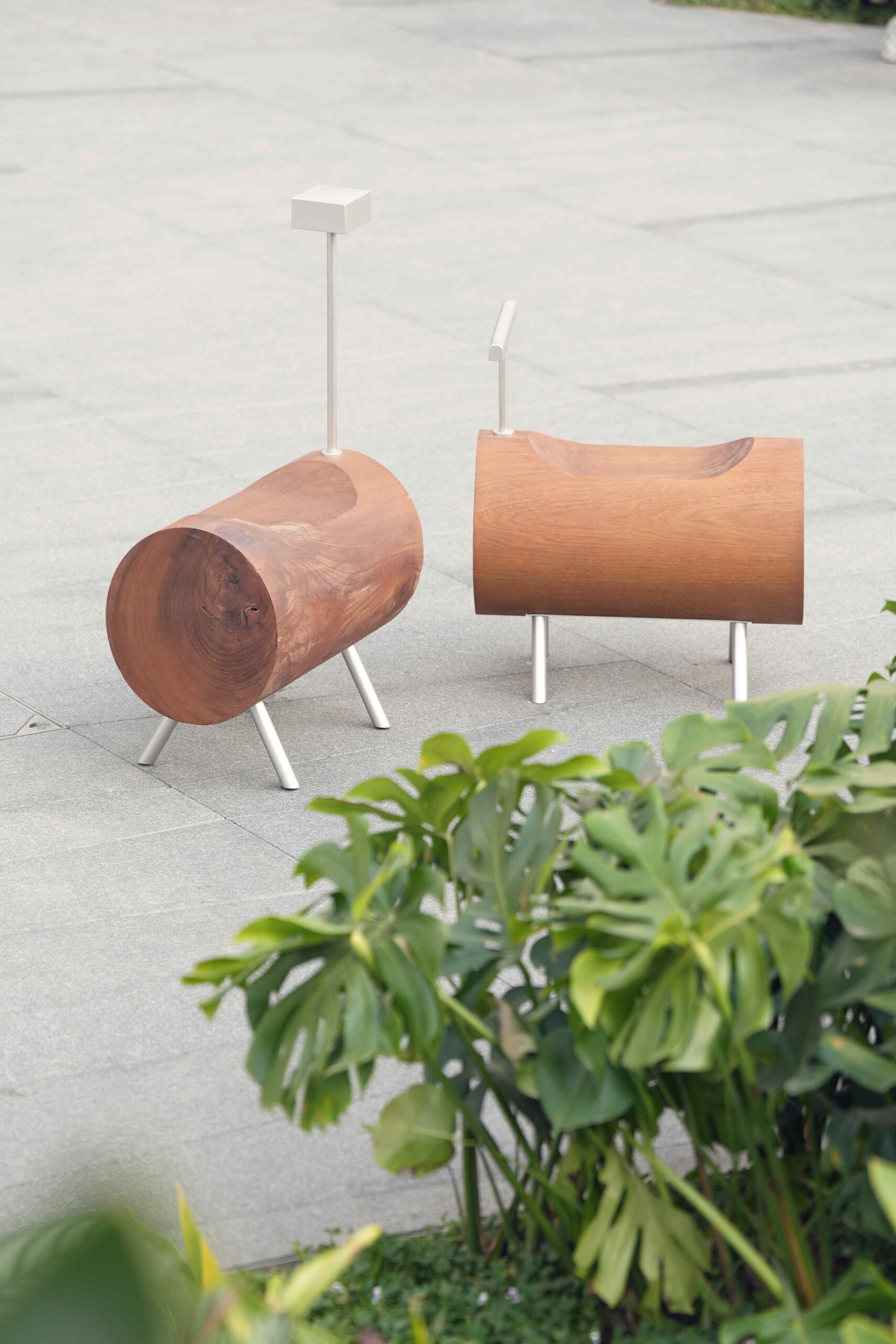
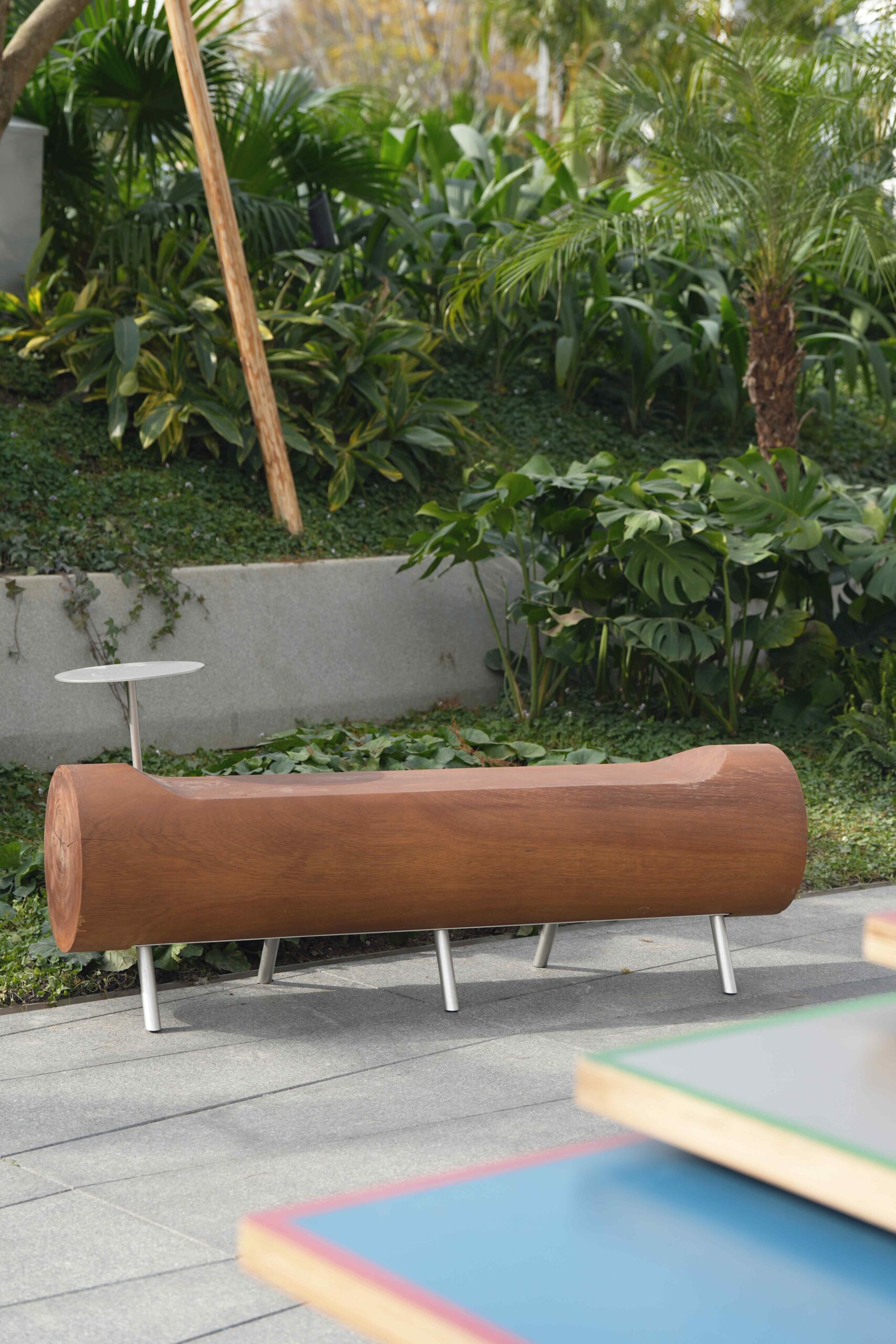
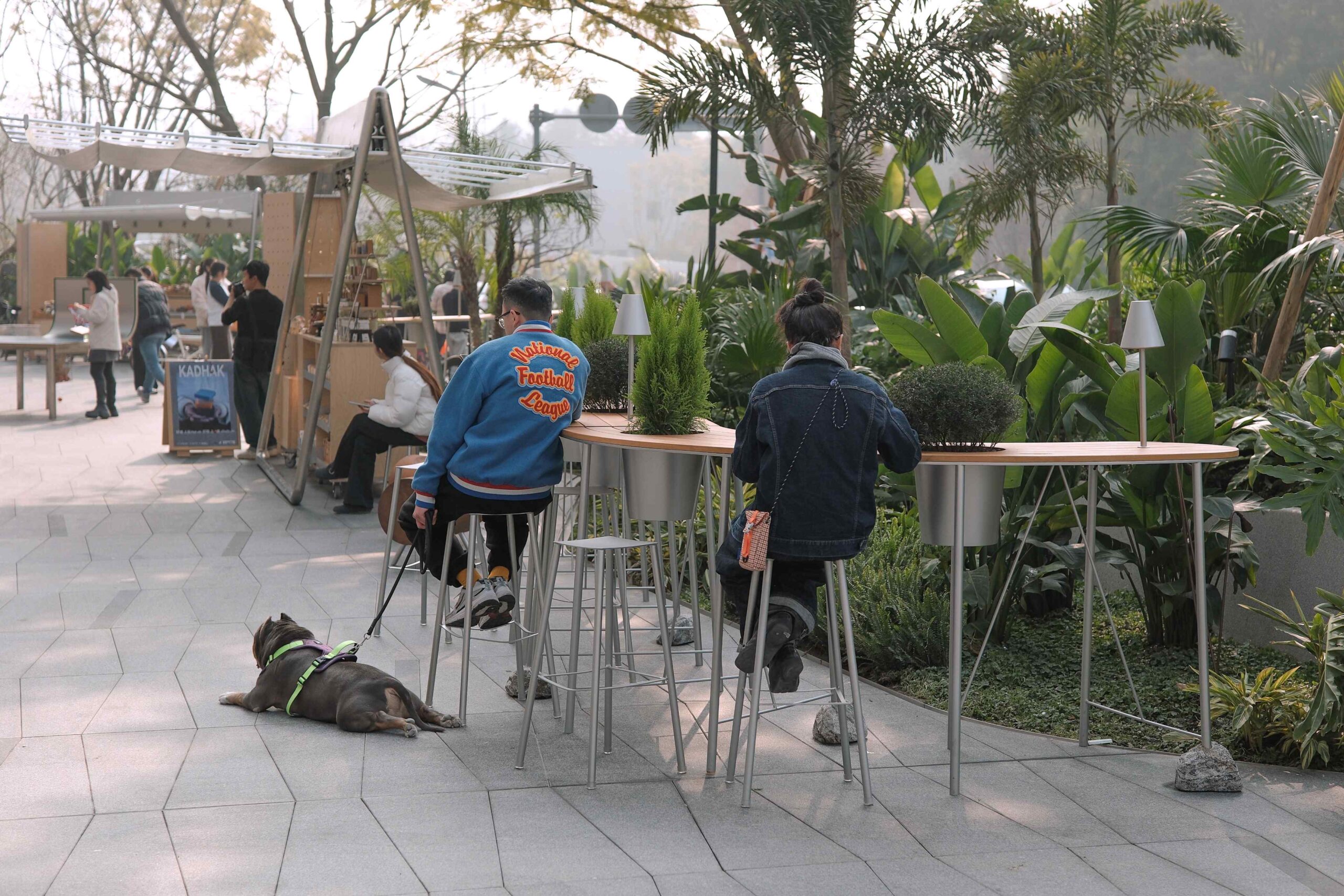
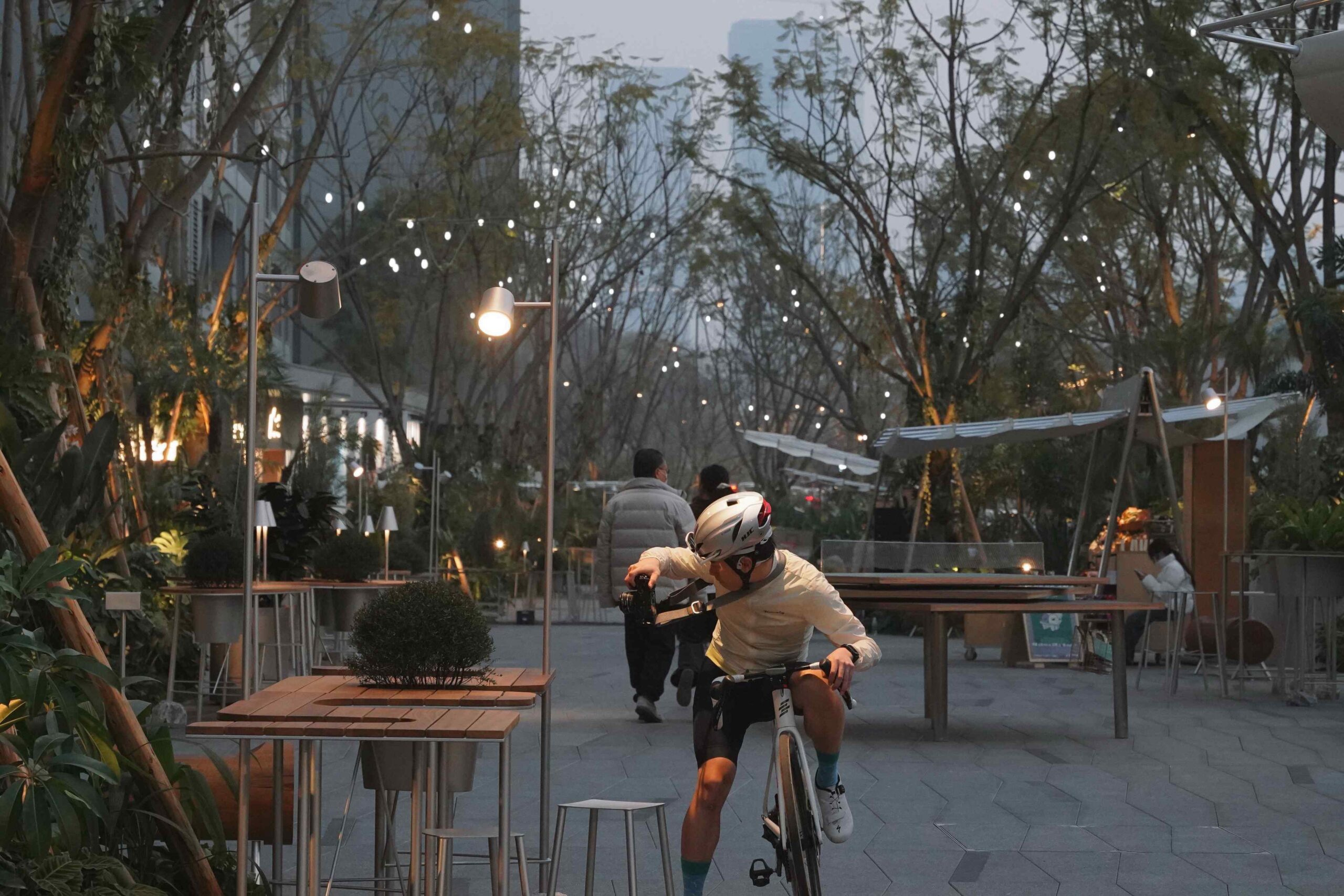
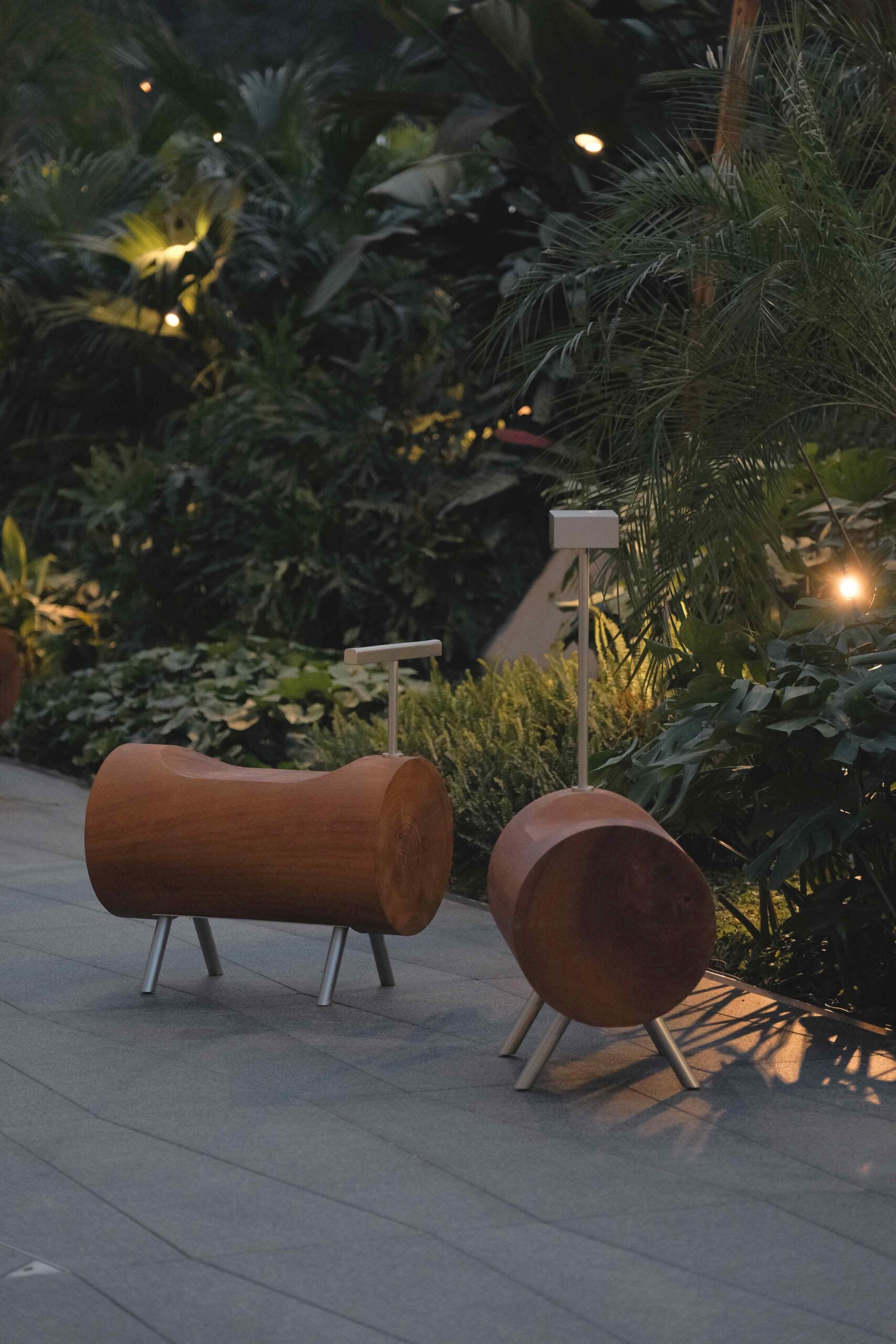
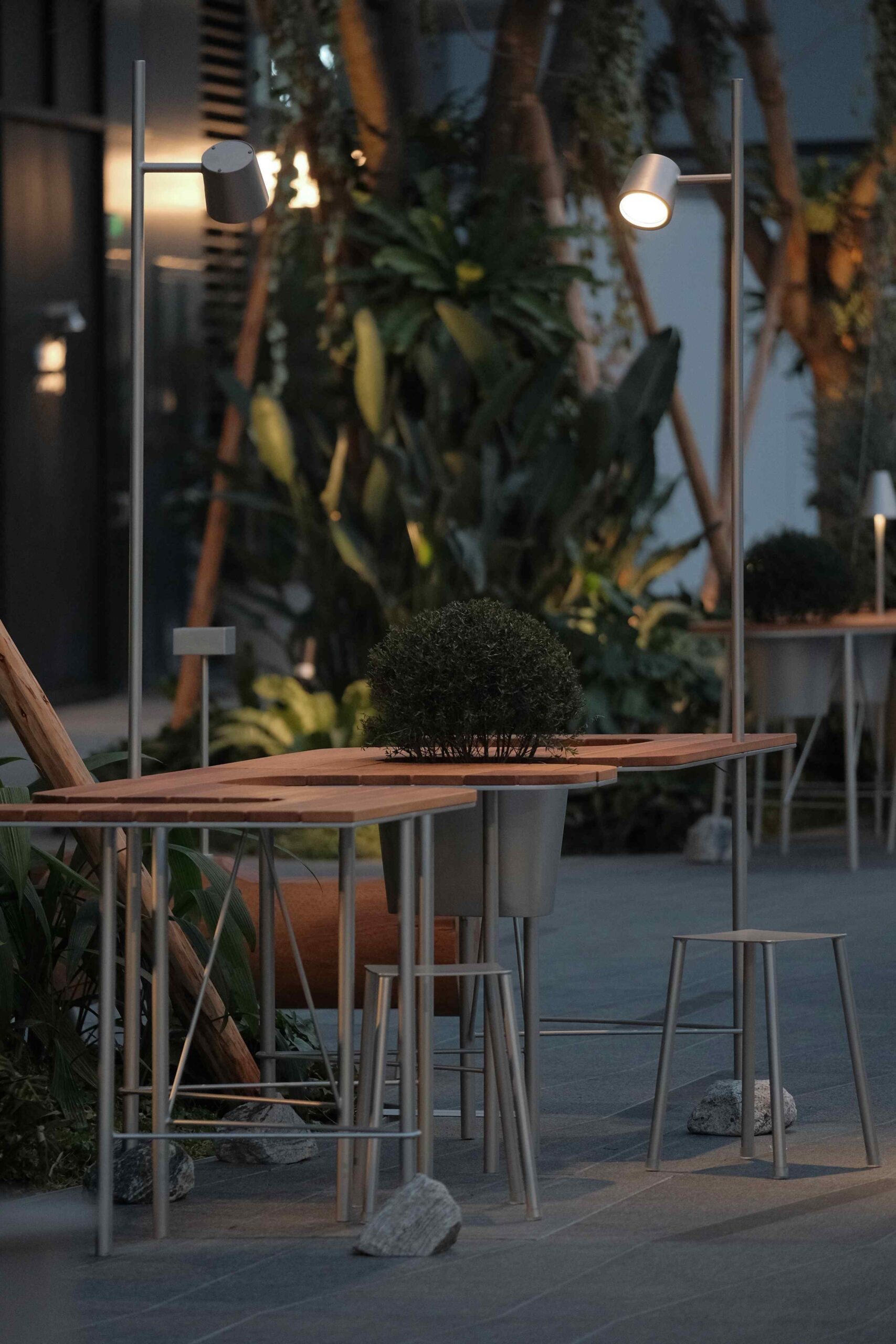
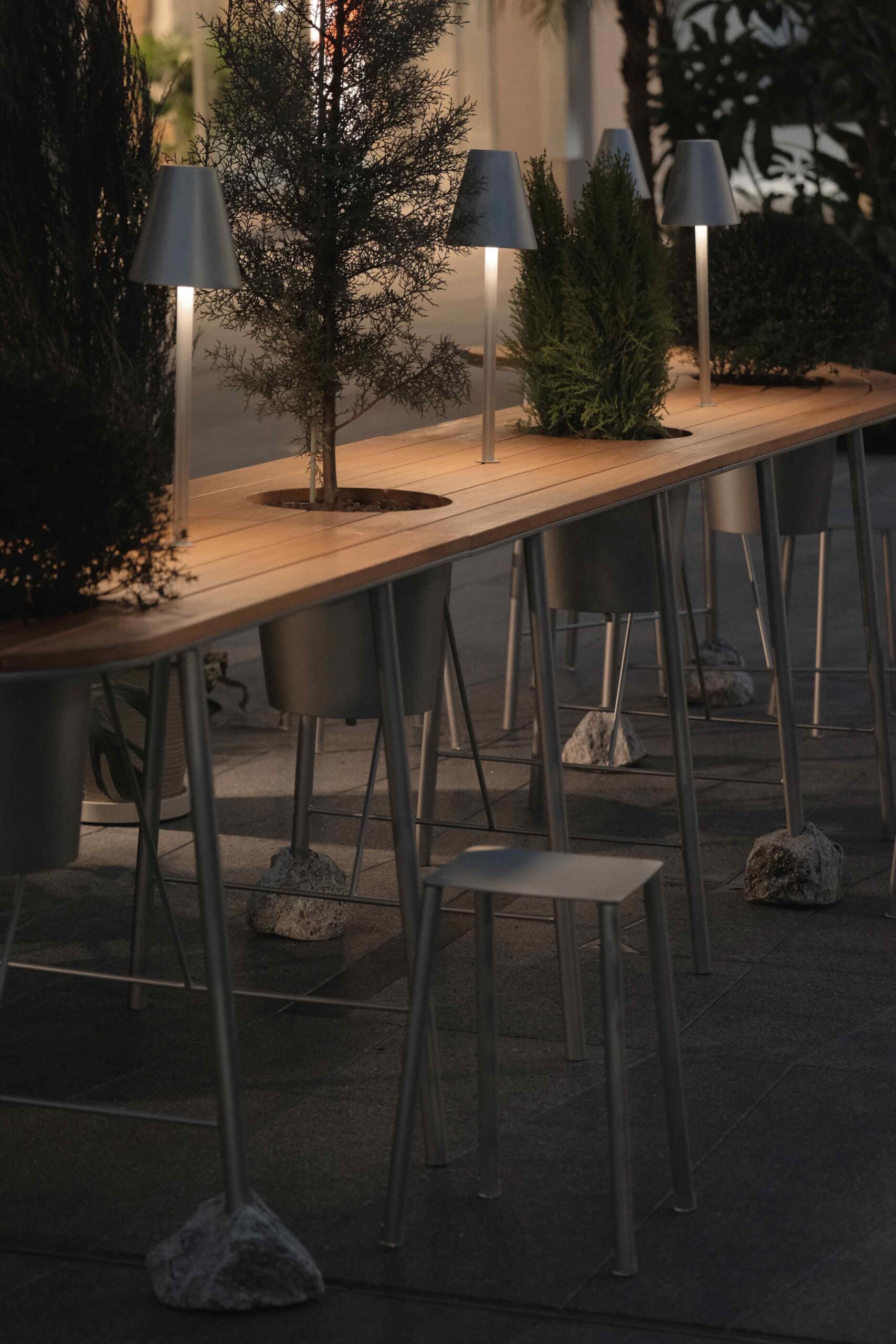
Located along A7 Commercial Street in Luxelakes, Chengdu, Table Table Project 2.0 is a spatial intervention that reactivates an oversized linear plaza through a flexible system of urban furniture and pop-up retail units. The site, shaped by an already completed architectural and landscape framework, includes a 150-meter-long and 15-meter-wide fire-access plaza along the ground-floor retail frontage. Although generous in scale, the space initially lacked greenery, places to stay, and elements that could support everyday public life. Rather than inserting fixed objects into the site, the project introduces an inhabitable and adaptable framework that combines tables, seating, planting, lighting, and small-scale commercial programs. Organized as a sequence of clusters, the system works with existing planting beds and shop entrances to soften the scale of the street and create a continuous yet varied pedestrian experience. Through shifts in height, width, rhythm, and configuration, the furniture supports multiple modes of use, including resting, socializing, display, play, and temporary events. The public furniture was conceived as an integrated landscape infrastructure rather than a collection of single-purpose tables or seats. Unfolding through the plaza like a meandering river, the table system creates an organic spatial flow within the linear site. Openings in the tabletops accommodate both plant growth and human use, bringing greenery closer to the body and transforming everyday encounters with plants into part of the public experience. Pebbles at the base of the tables, embedded planting, lighting fixtures, and geometrically trimmed greenery further enrich the relationship between people, objects, and nature. The furniture adopts a modular strategy. Softer, more organic tabletop modules are combined with linear modules that generate a more ordered rhythm. During implementation, the grouping of the tables was carefully adjusted according to existing planting beds and the opening conditions of adjacent shops, allowing the system to respond precisely to the site. Structurally, the furniture is based on a steel framework, with solid teak slats used for the tabletops to provide warmth and durability in an outdoor environment. Multiple slender rods and diagonal bracing form the table legs, achieving both stability and visual lightness after several rounds of prototyping and testing. The pop-up stores extend the function of the plaza beyond circulation. Each unit is composed of an inverted V-shaped stainless-steel frame, a lightweight canopy, and movable marine-plywood counters. When closed, the counters slide beneath the frame to create a compact profile; when opened, they can be freely arranged for storage, display, service, or social interaction. Operated by a hand-cranked cable system, the canopy can be adjusted by a single person, supporting flexible everyday use. Through a light-touch yet highly adaptable intervention, Table Table Project 2.0 transforms a fire-access plaza into an active, green, and human-scaled public environment, demonstrating how urban furniture can operate as spatial infrastructure that shapes behavior, supports flexible programs, and enriches everyday urban life.