
The Ellinikon Park
Design a cura di: Sasaki
Categoria: Progettazione architettonica
Da: United States
Anno di riconoscimento: 2025
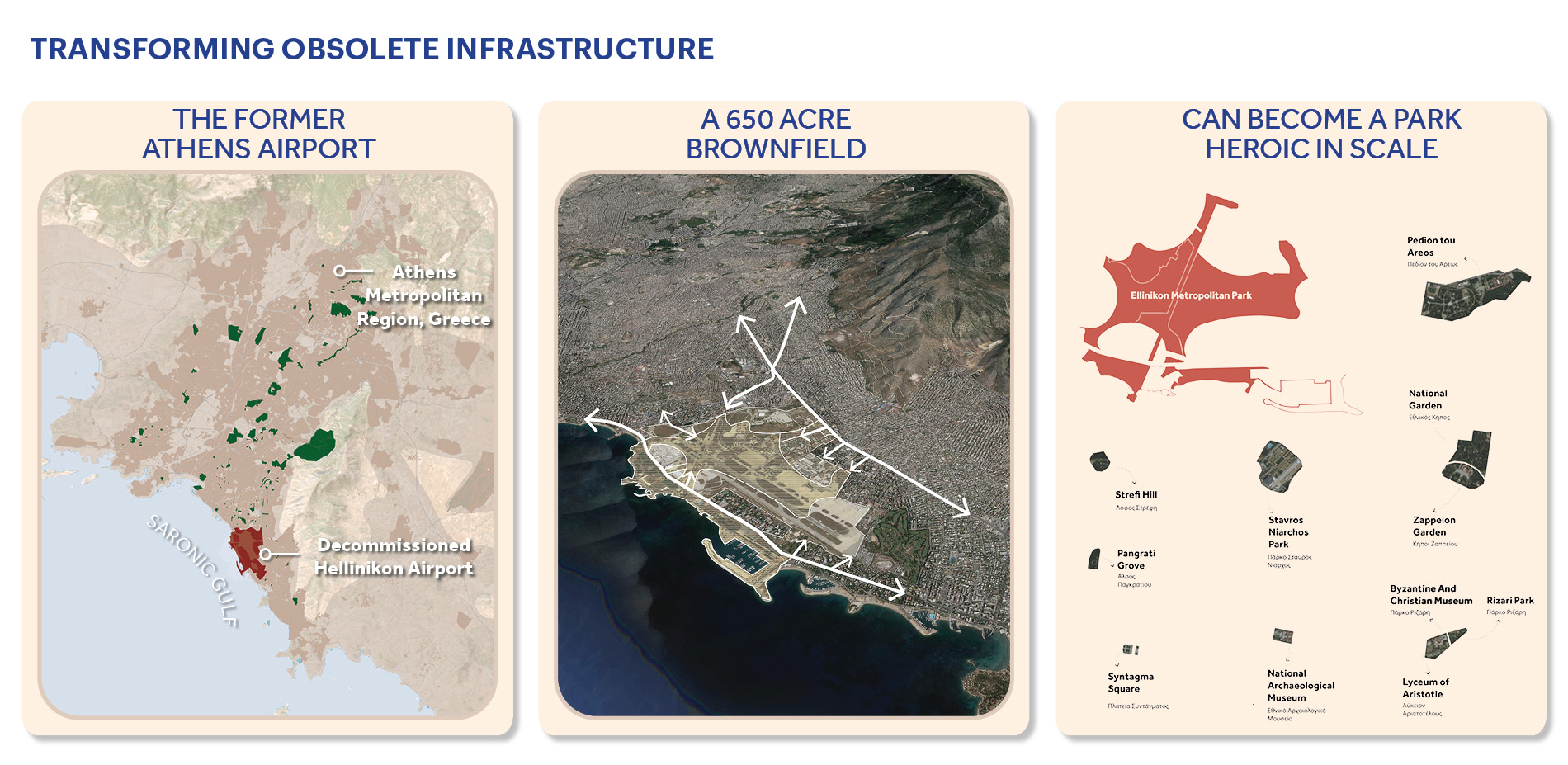
The design of the Ellinikon Park in Athens, Greece is grounded in the goal of reinforcing the city’s relationship with nature while mitigating climate change impacts through globally replicable and regionally specific strategies. The planning of the 263 hectare park began with a climate action goal-setting exercise and prioritization workshop with the client team, where through the use of benchmarking, and interactive digital tools, the team was able to convince the client to pursue ambitions climate action goals, specifically – planning for a carbon positive park, reclaimed water, and creating an urban heat refugee. This commitment enabled supplemental on-site field investigations and testing, including a meticulous analysis process which included extensive soil and concrete testing, additional geotechnical borings, and field surveys of established vegetation across the abandoned airport site.
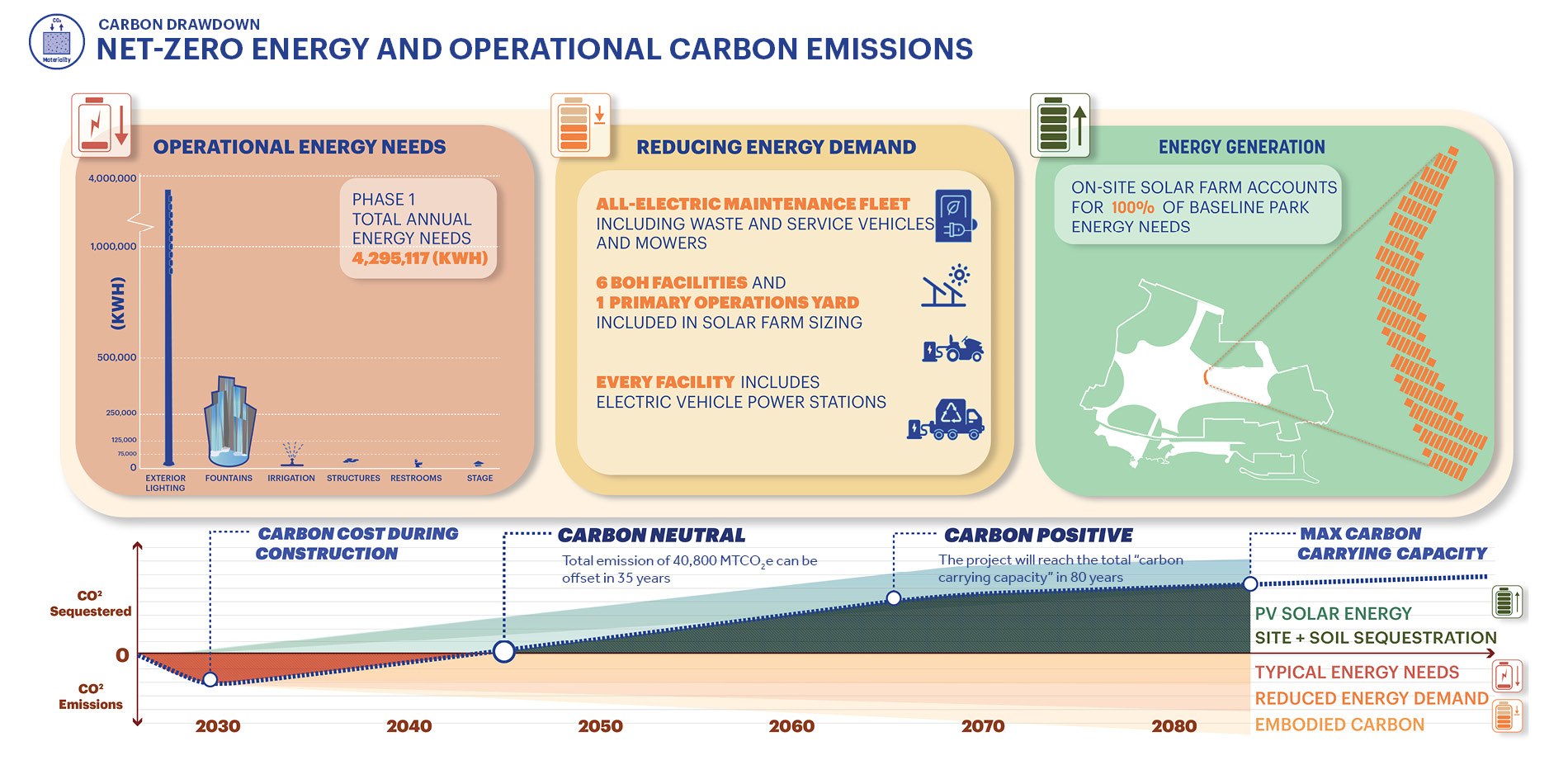
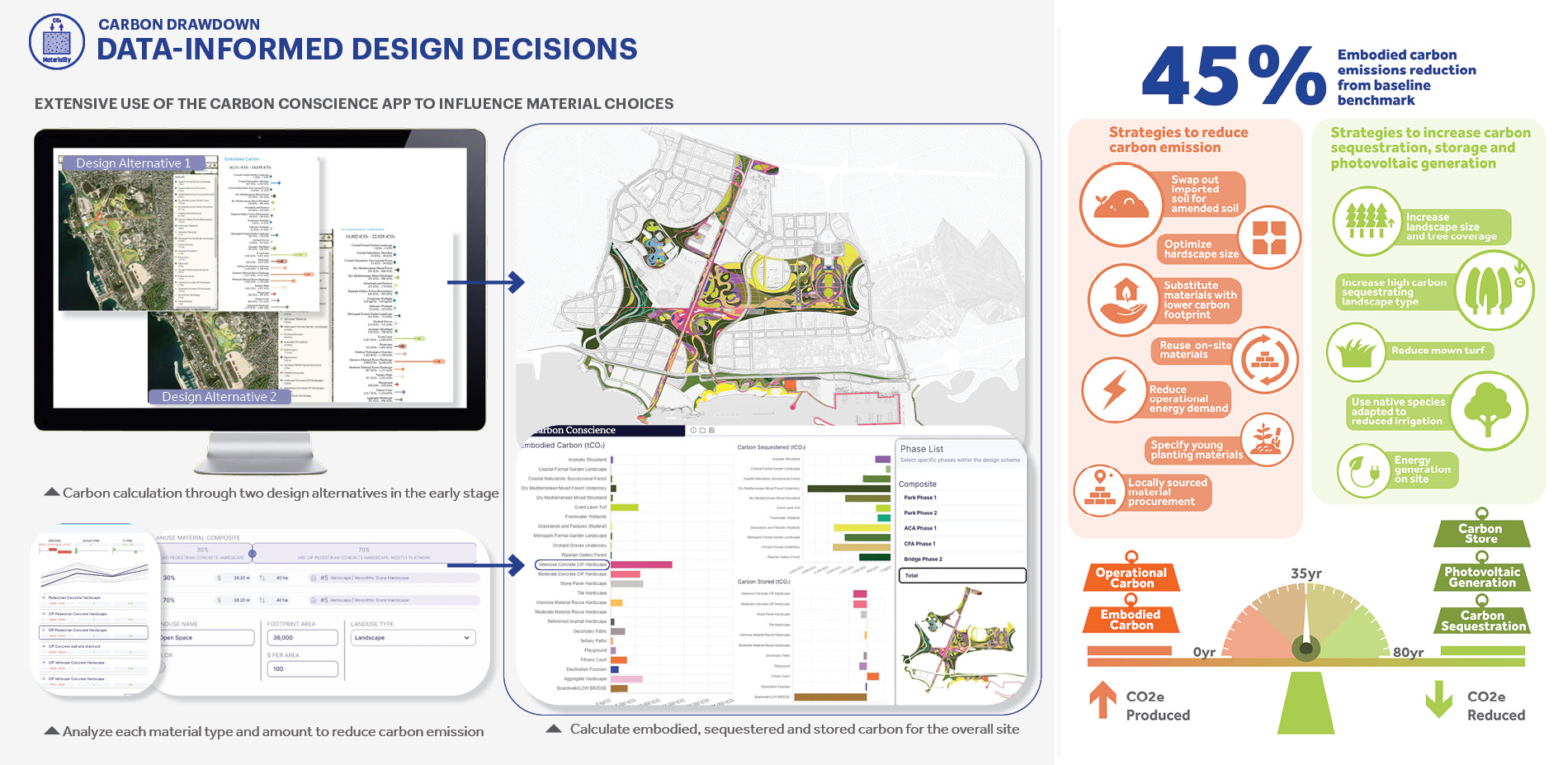
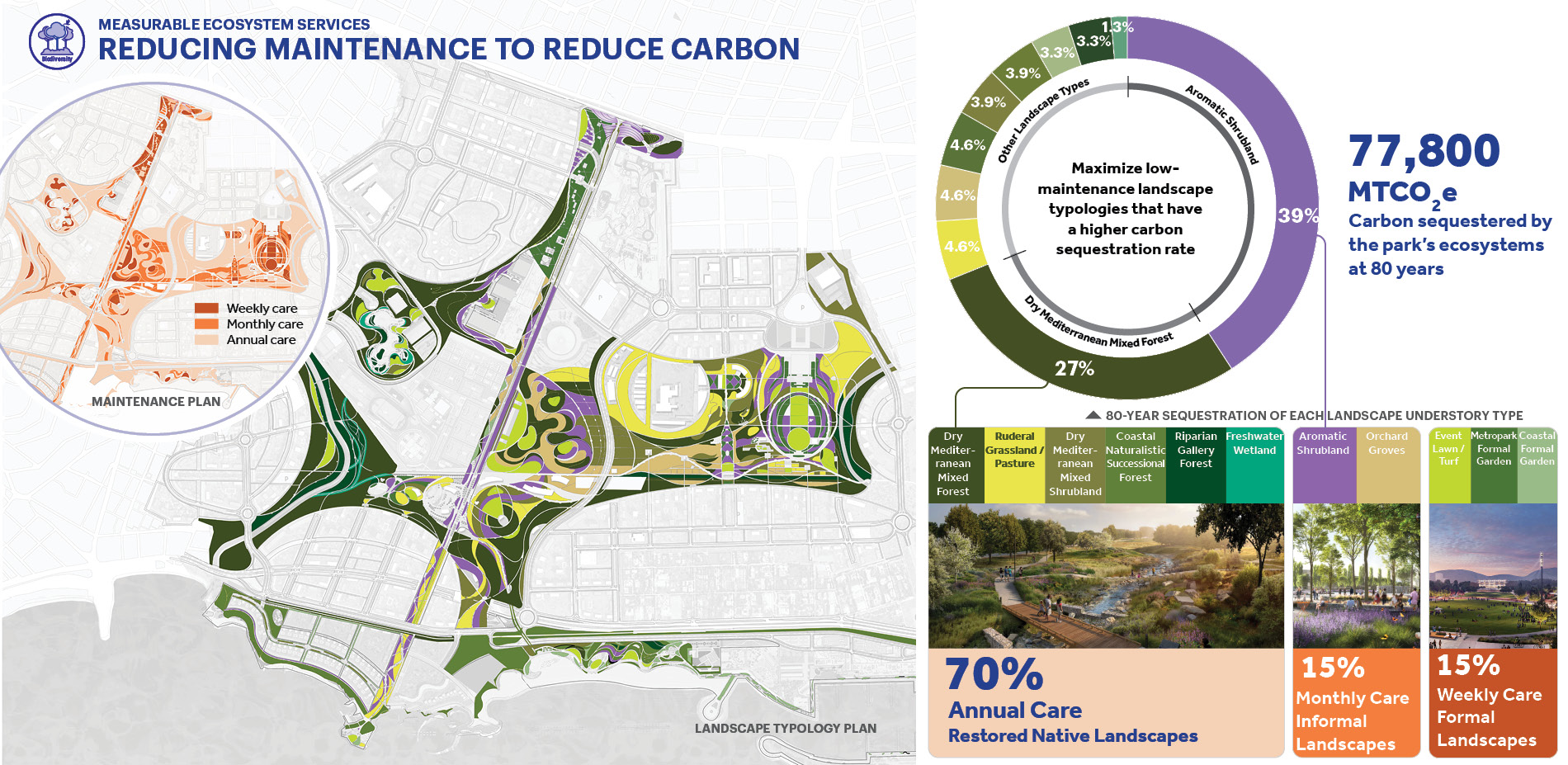
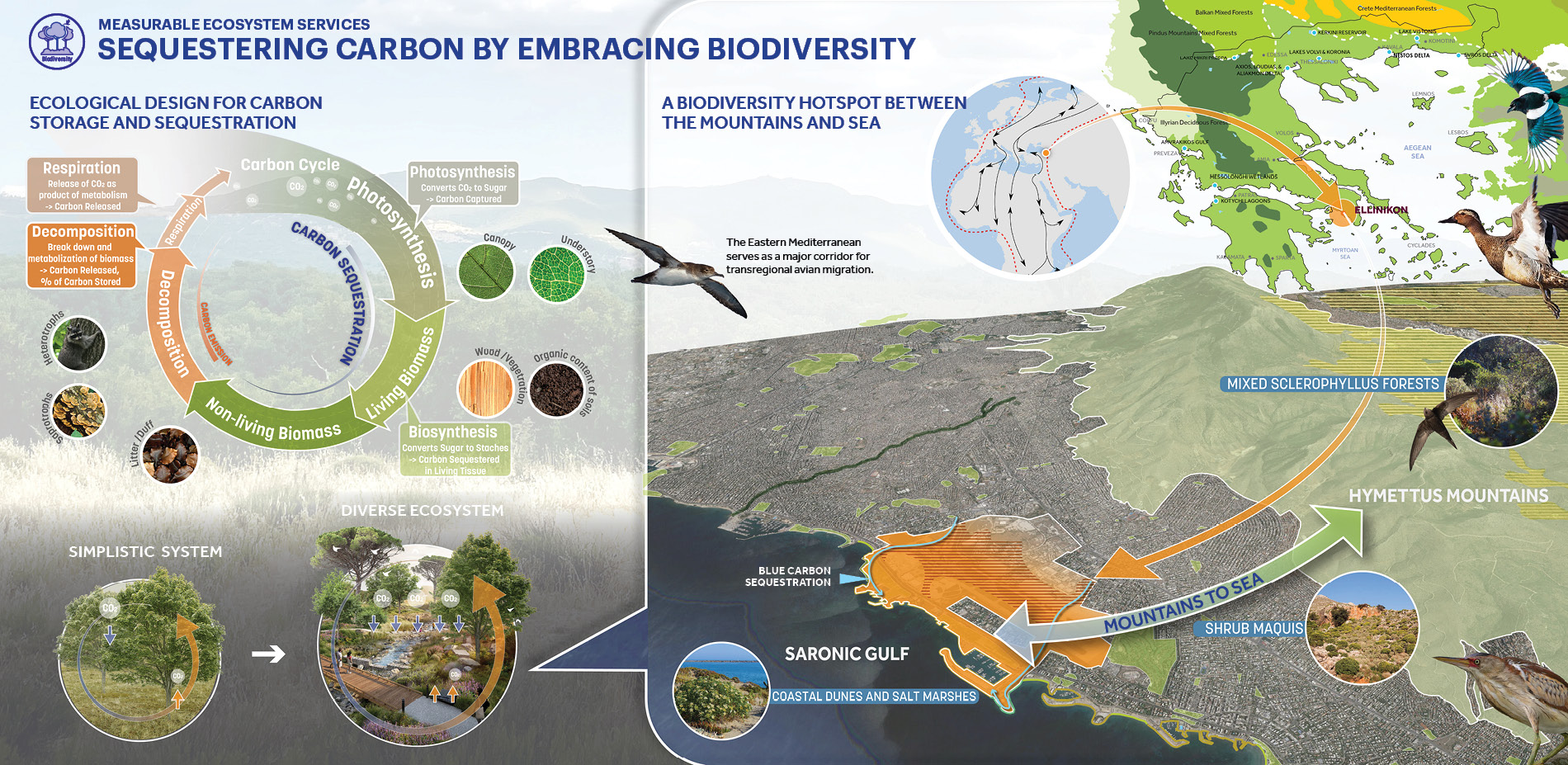
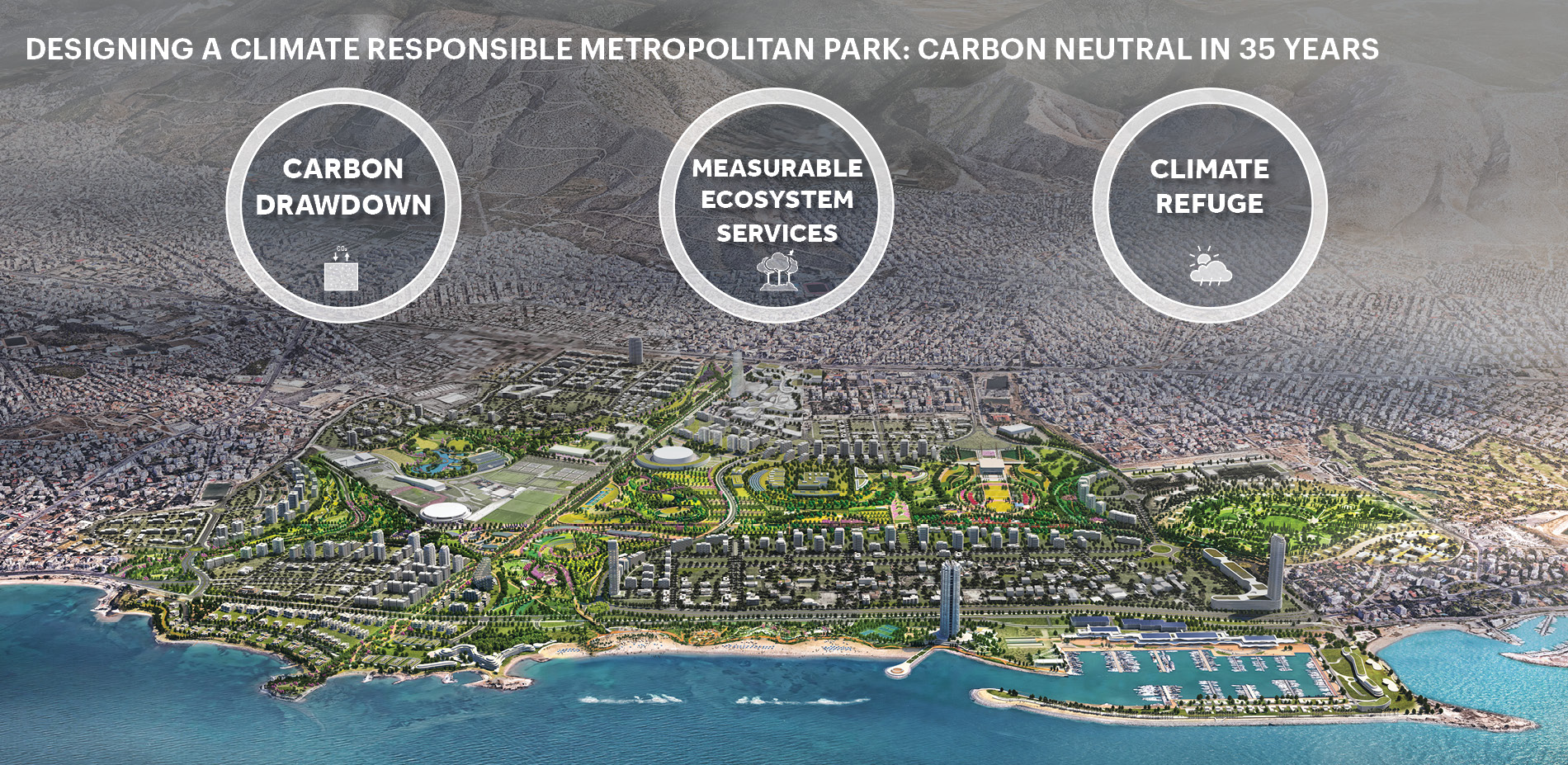
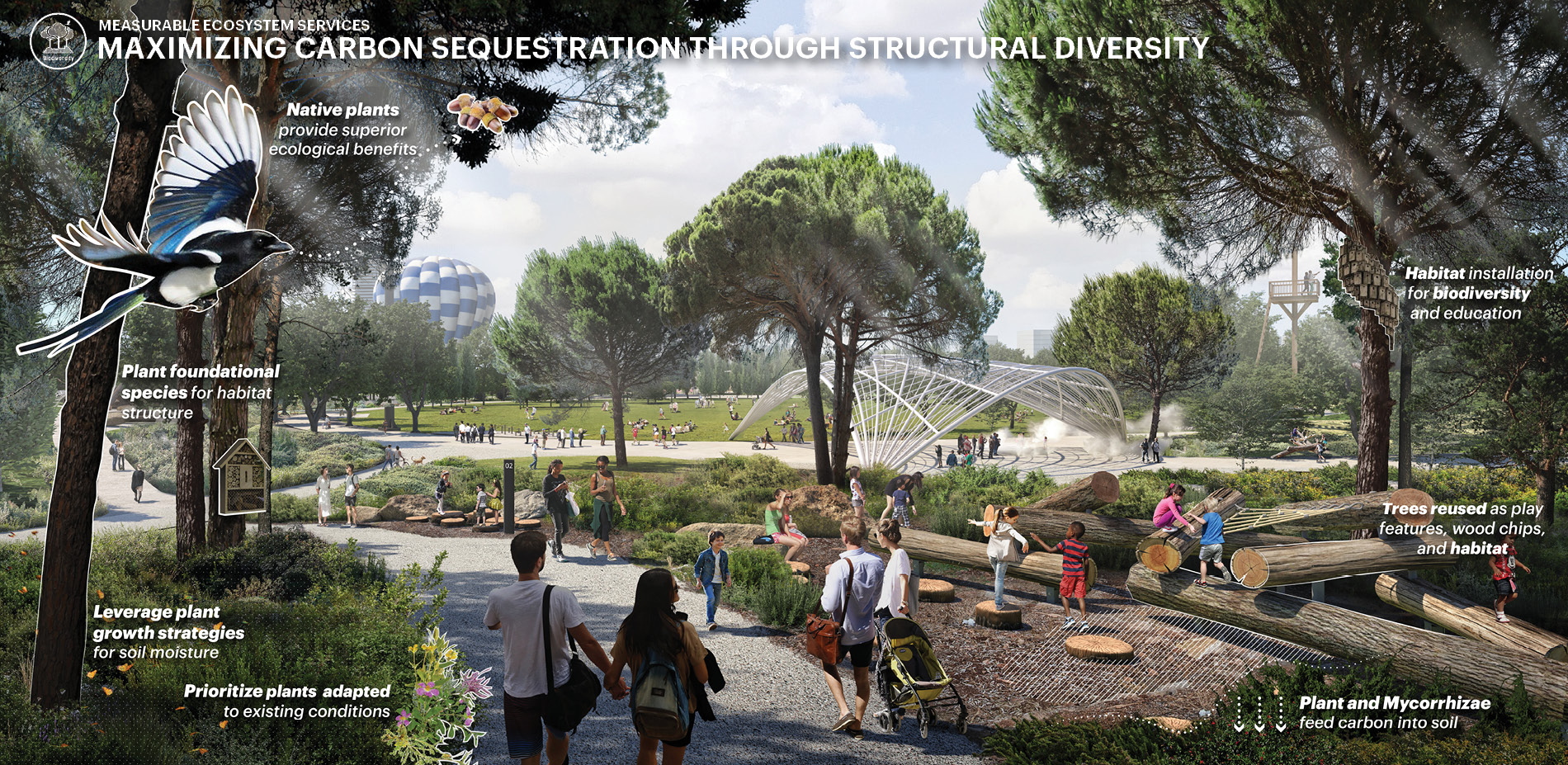
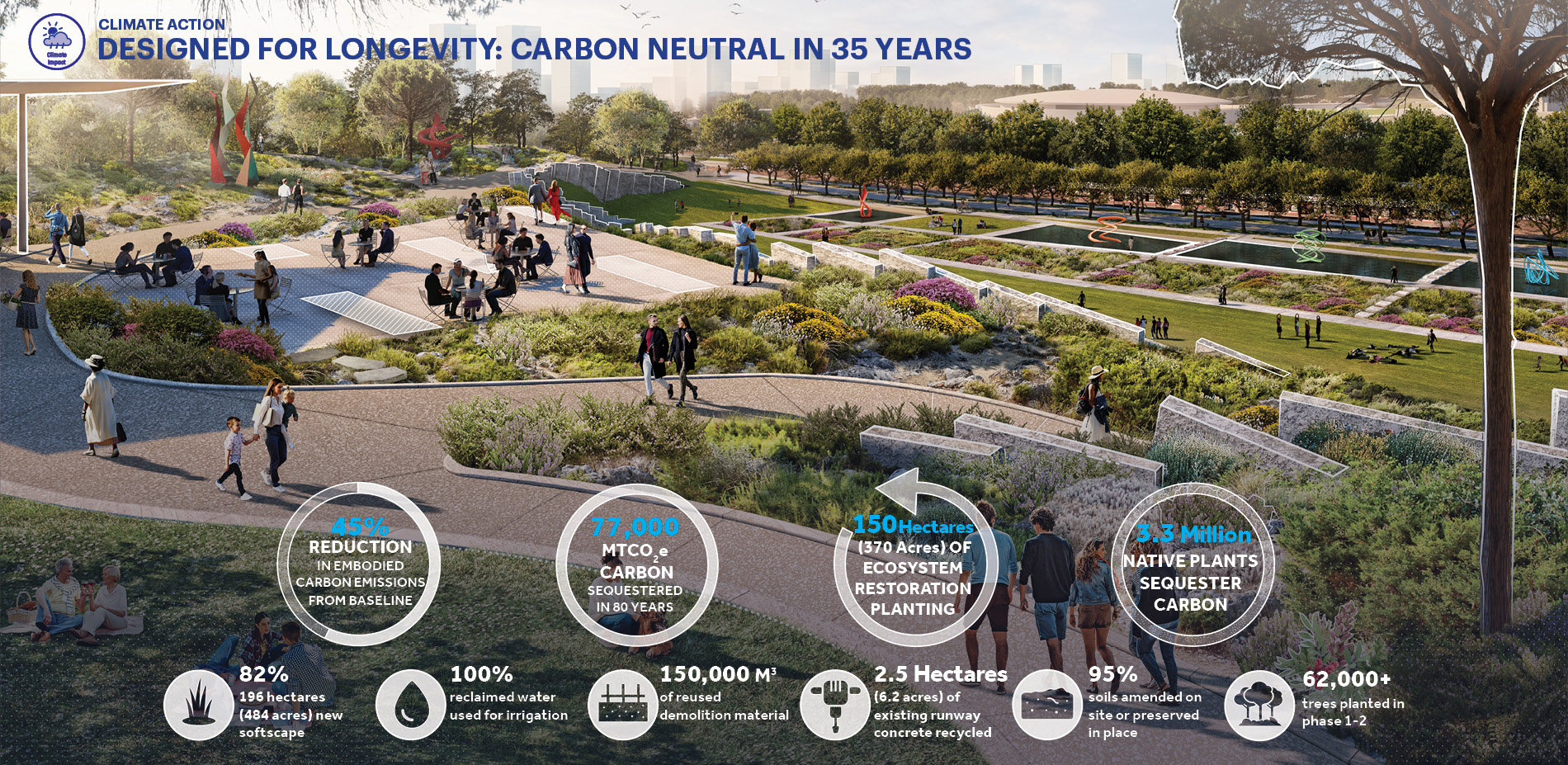
Detailed carbon assessments were conducted during early design phases, intentionally guiding high-level design iterations and right sizing hardscapes, restoration areas, and land use typologies, targeting a ‘climate positive design,’ and a 50% reduction in baseline emissions. The carbon goals proved particularly challenging when the design team integrated datasets with local Mediterranean ecosystem parameters – being a low-carbon sequestration and storage capacity biome, and local detailing expectations and material EPDs. After iteration, testing, and advancement through the planning to technical design phases, the result was a projection of carbon neutrality in 35 years, a 45% decrease in embodied carbon, and an expectation of ~40,000 MTCO2e (metric-tons CO2 equivalent) additional carbon sequestered when the landscape achieves carbon-carrying capacity.
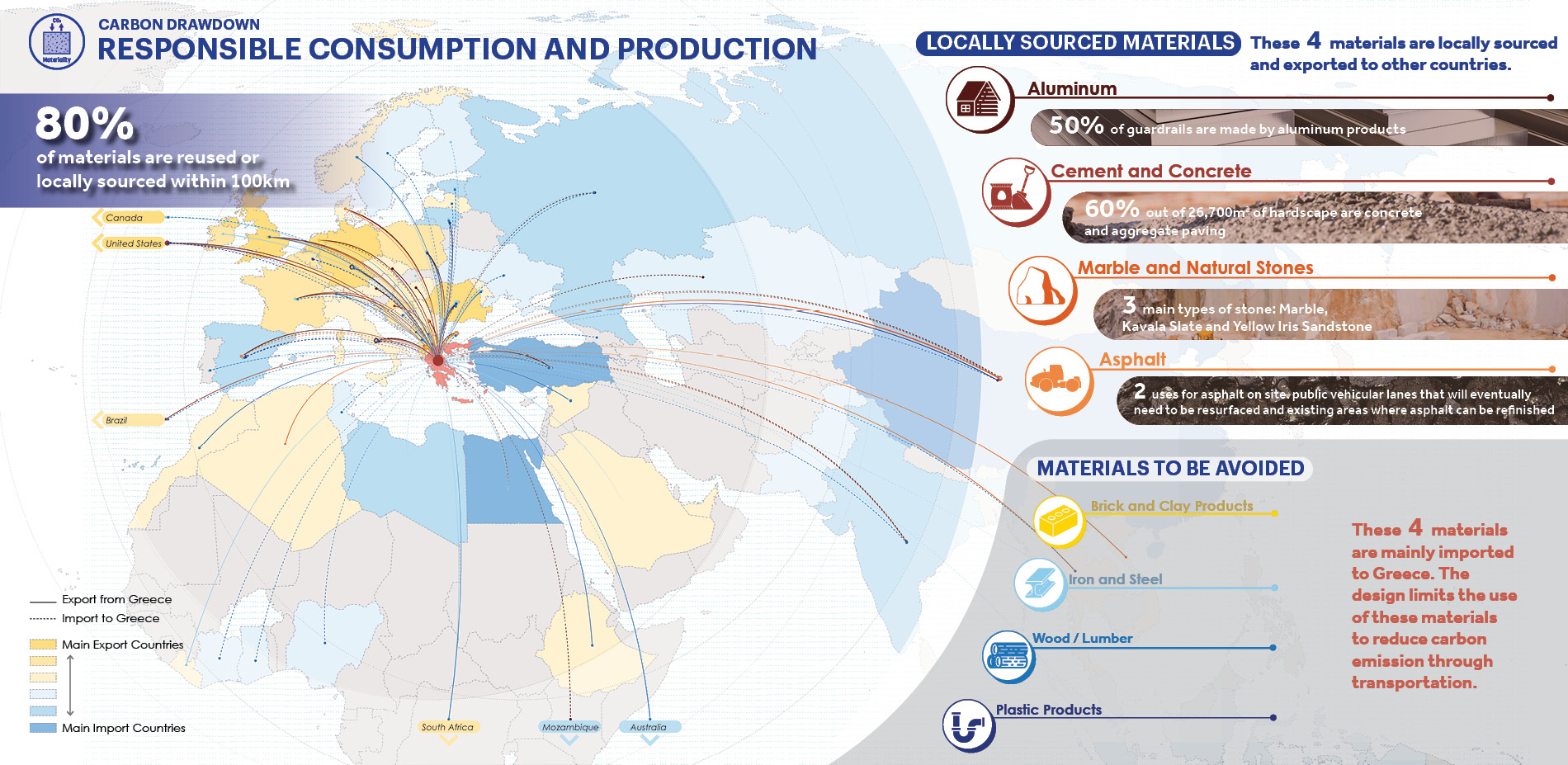
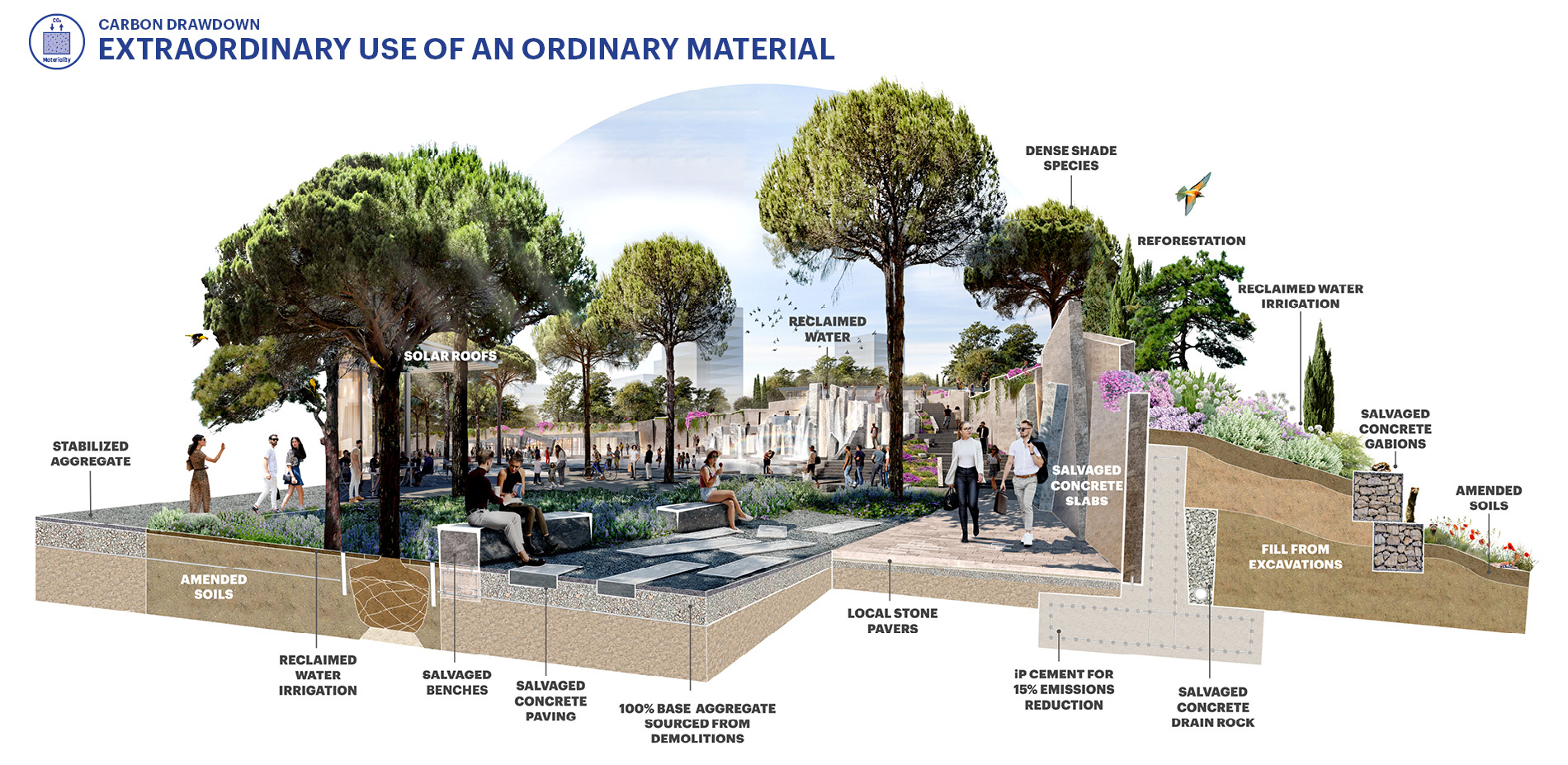
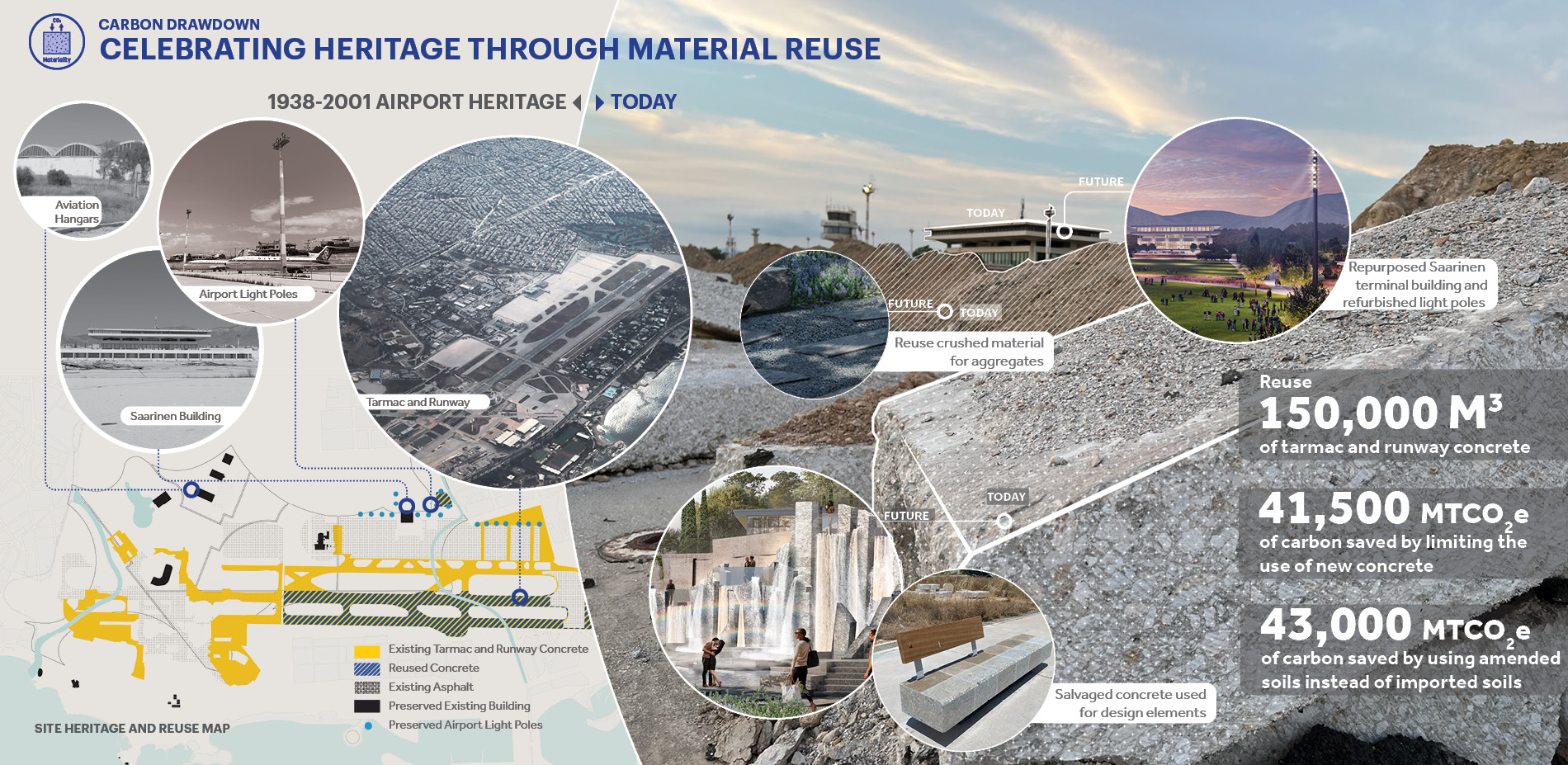
To get there, what would typically be discarded in site demolition was instead reused and celebrated to reduce the project’s overall embodied carbon while telling the story of the site’s history. Key carbon reduction strategies included soil amendments and reuse, material reuse, afforestation, and minimizing new concrete applications. The repurposing of the existing airport runways enabled the reuse of approximately 150,000m3 of existing demolition material. Some materials are refinished in place; some are used in clean fill, crushed road base, or rip-rap; and some are upcycled as paving, benches, and retaining walls as a substitution for precast concrete.
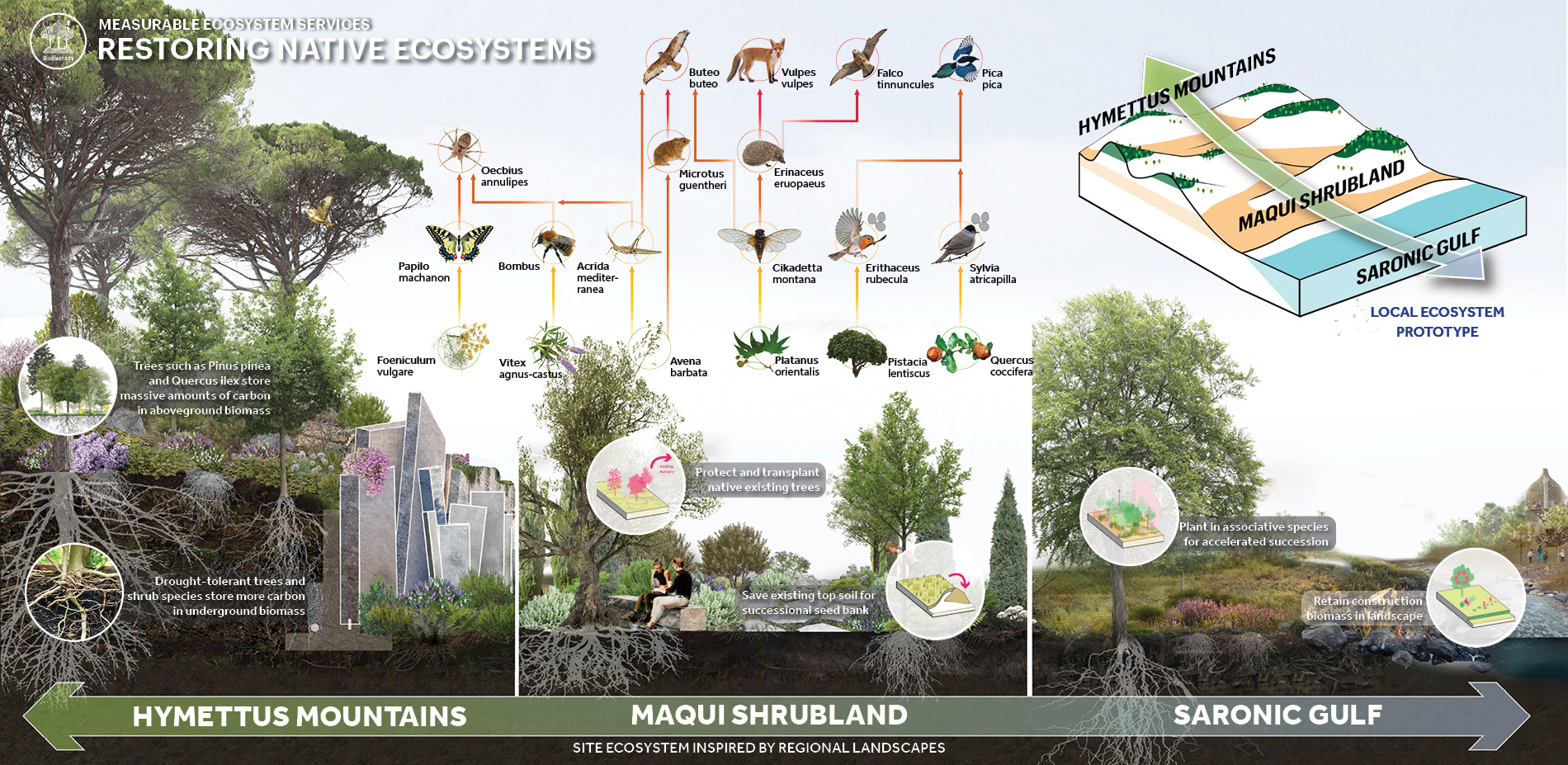
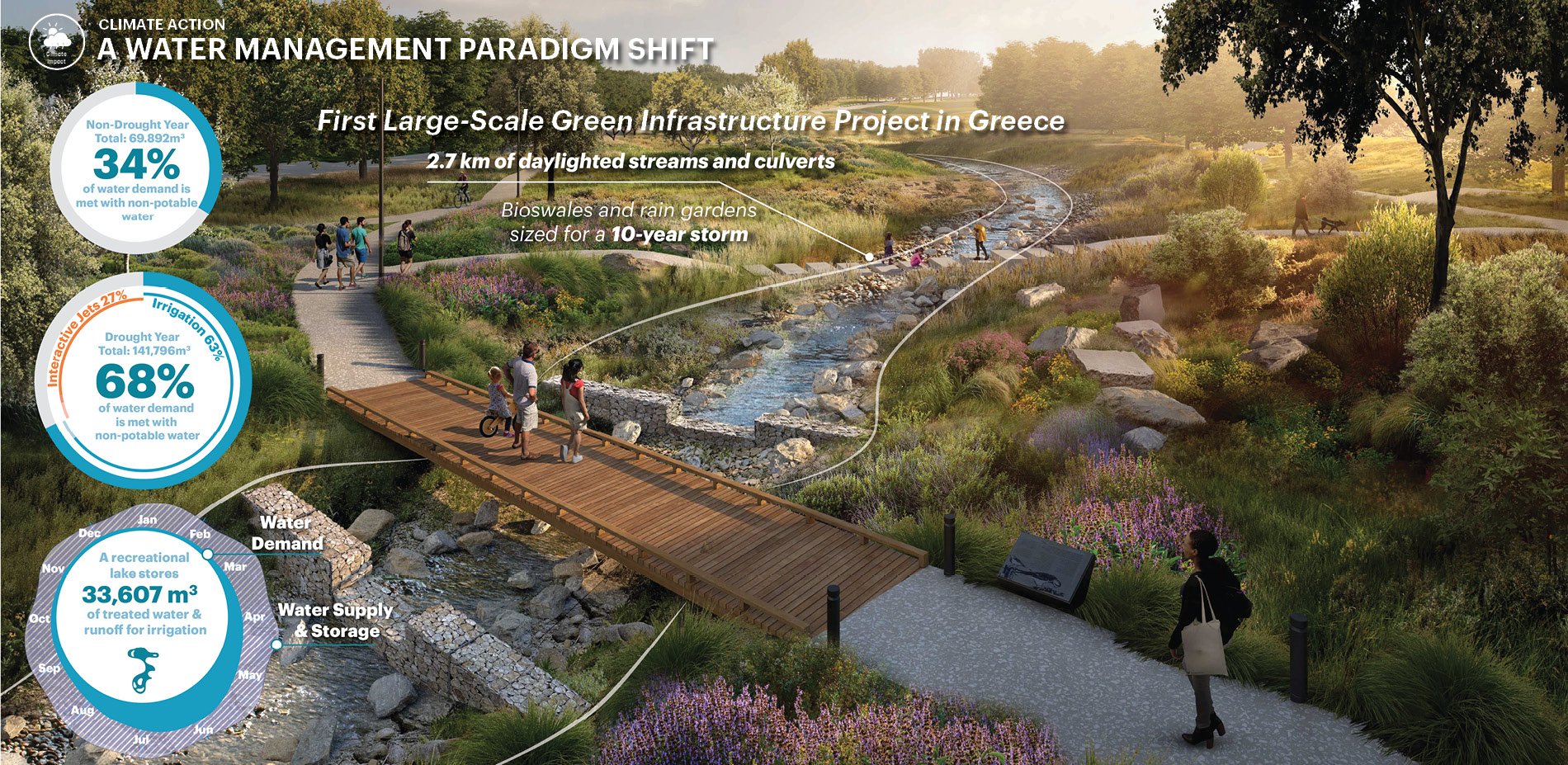
The planning process also included a full energy modeling study to size an on-site solar farm to offset operational energy. The maintenance manuals were developed in tandem with the planning and design process and included specifying an all-electric fleet of vehicles and equipment, a commitment to organic horticulture, and integrated pest management practices. Irrigation will be provided through reclaimed water sourced from sewage mining, with approximately 60% of the park dedicated as an ‘establishment-only irrigation zone’ and allowed to naturalize.
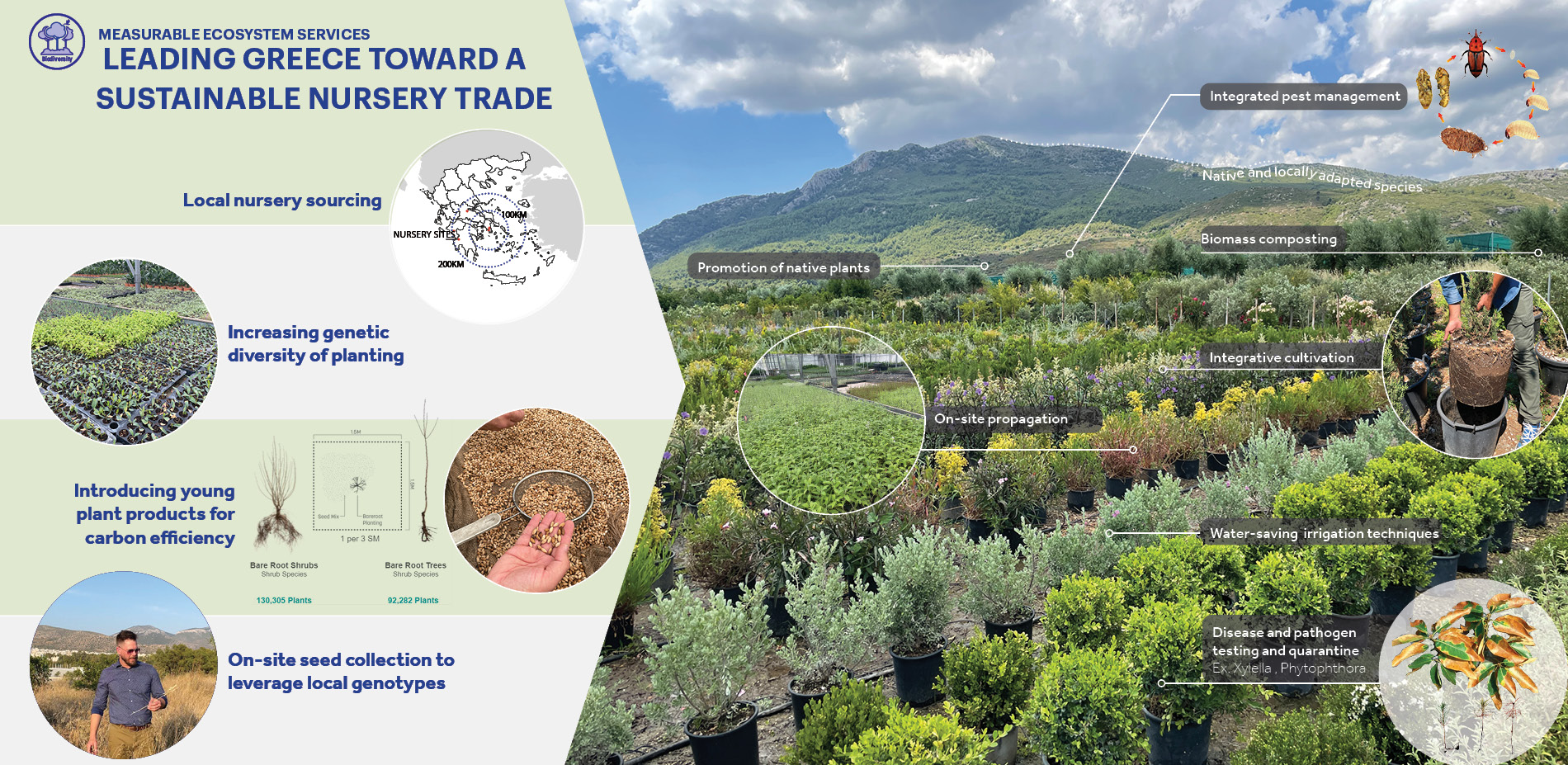
A large-scale afforestation approach further supports carbon sequestration and urban heat island mitigation goals. Over 3.3 million plants will be sourced within Greece, and were selected for their ecosystem services and adaptability to the site’s alkaline soils – this planting design was a product of extensive nursery visits, and collaboration with local ecologists and universities. The plant list—which includes trees, shrubs, geophytes, and herbaceous material—was carefully considered based on native status, adaptability to local climatic conditions, and cultural connections and traditions. As the largest plant procurement project in Greek history, the restoration goals necessitated direct collaboration with local nurseries beginning during the site analysis and initial planning phase.
Beyond honoring Athenians’ emotional connection to the Greek landscape, the park will also rekindle the city’s relationship to one of its mid-century architectural marvels—the Eero Saarinen-designed terminal. The adaptively reused structure is the centerpiece of a grand event space in the park, emphasizing its dignity and importance as the building that connected Greece to the modern world.
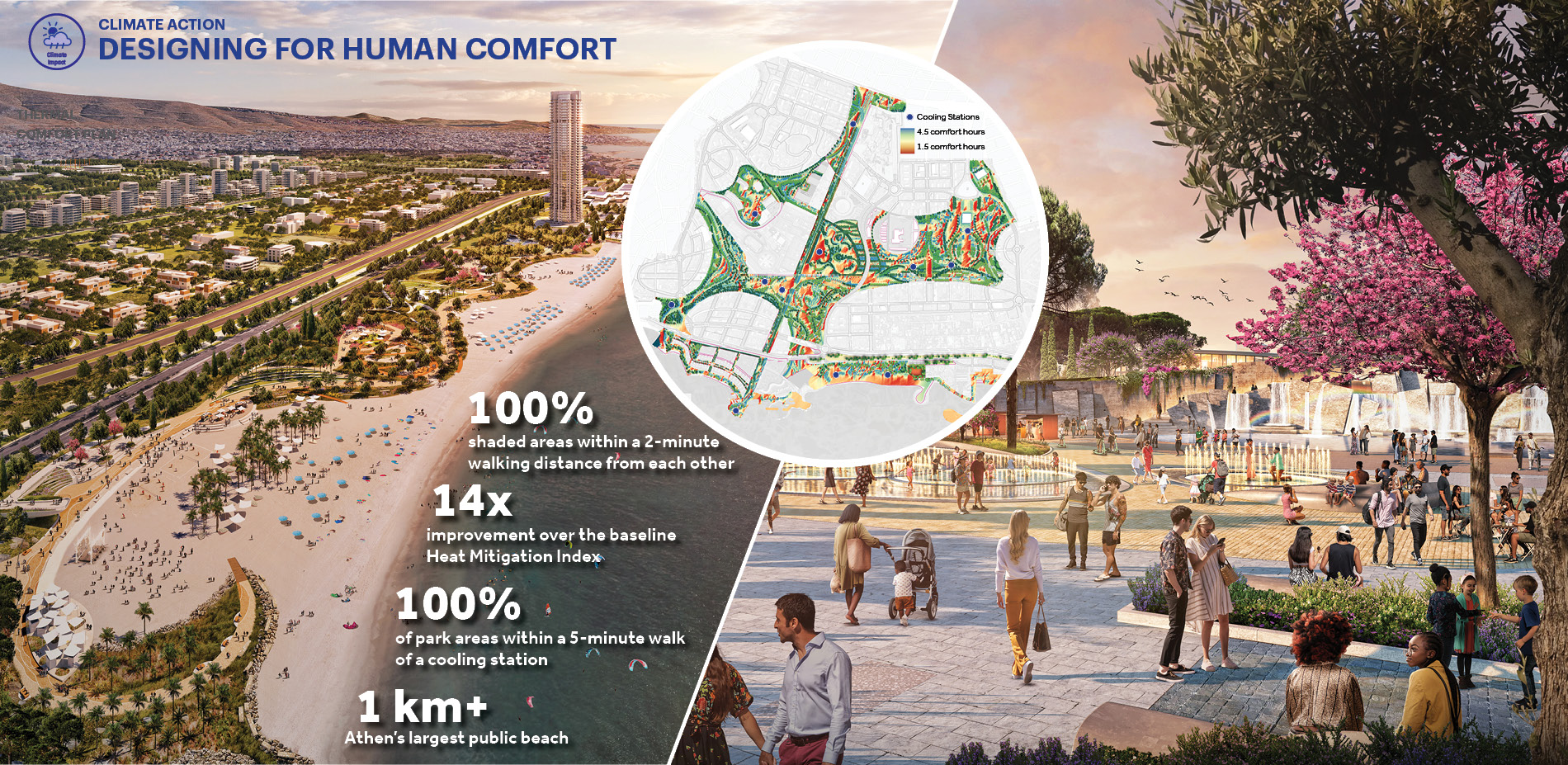
Given the heat emergencies of the last few years in Athens, and the projection of Athens to have an average warming of +5.4°C by the end of the century, the park is designed as an urban heat refuge. In addition to modeling and optimizing uniform thermal comfort through reforestation and shade structures, the design team added strategic cooling stations, from water walls to interactive fountains, and misting stations, which are located so that no park location is more than a 5-minute walk from a cooling station. The park will also include Athens’s largest public beach – a 1 kilometer-long, transit-served public beach providing equal access to the restorative waters of the Saronic Gulf, for an urban population that today must drive south or east out of the city to access quality public beaches.
This park and waterfront will increase the allocation of park space per Athenian resident by 44%, connected to main mass transit lines, and with porous edges touching diverse existing and future neighborhoods. This park is historic in ambition and service – providing a pivot from the years of financial crisis – to providing leadership for the future of European public space and providing a public amenity with quality natural spaces, play spaces, and recreational programs for an economically diverse and resilient community.
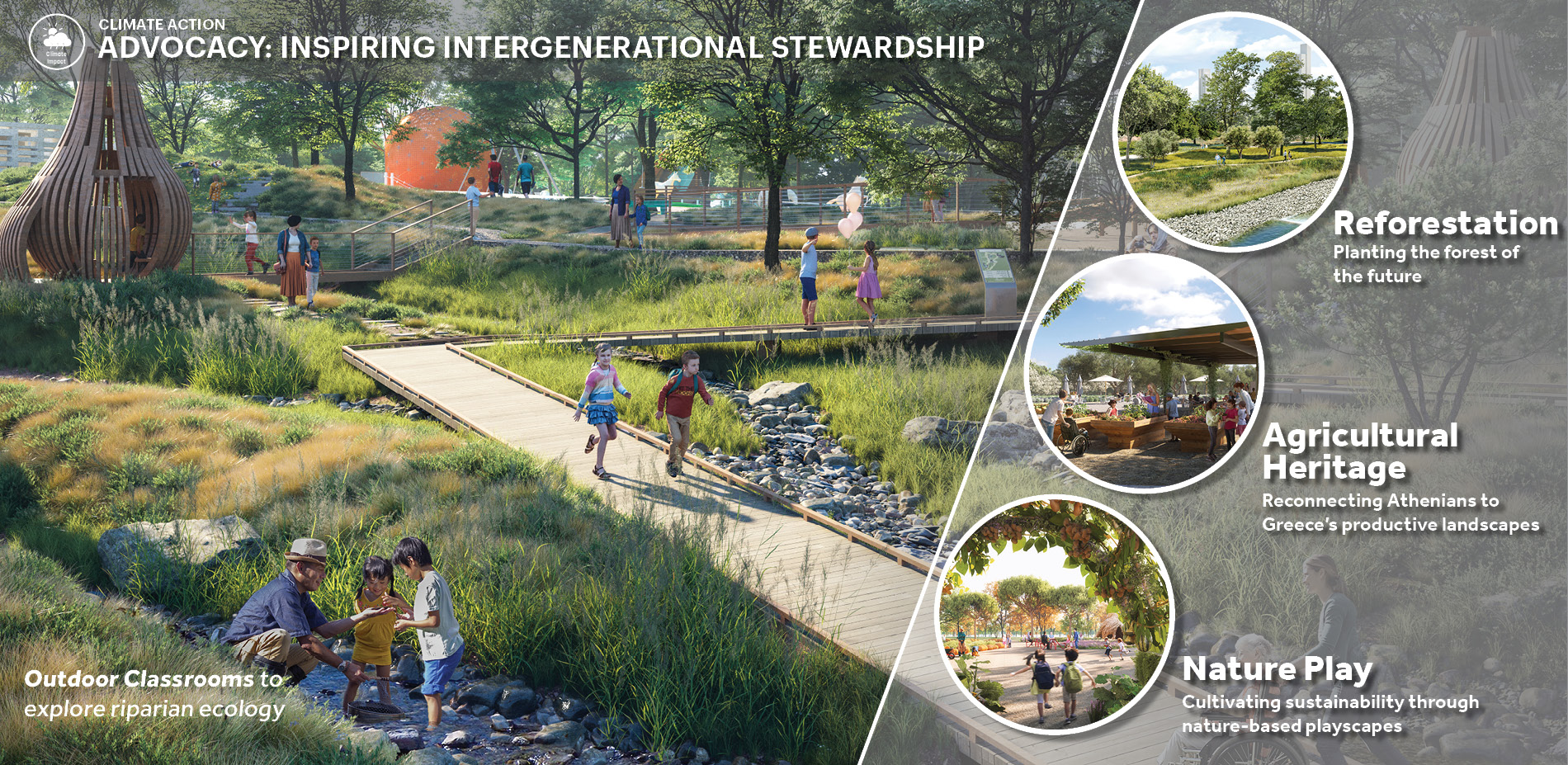
The Ellinikon Park is heroic in scale, grounded in the goals of ensuring climate responsiveness and carbon-positive design, ecological restoration, intergenerational stewardship, and equitable access for all Athenians.
Condividi con :
Circa
About For over 70 years, Sasaki has been guided by the commitment to a collaborative style of design. Our way of working brings together diverse perspectives, blended disciplines, open exchange, and deep engagement with clients and the communities we serve. This depth and multi-disciplinary expertise are particularly meaningful on projects where issues of scale, complexity, urban site constraints, transportation, historic context, regulatory approvals, resilience, and community process all must be addressed simultaneously and through a rigorous design process. Sasaki’s immersive, integrated approach to design synthesizes physical, social, environmental, economic, and regulatory complexities into bold, actionable solutions. We work with public agencies, institutions, and developers globally to create meaningful and sustainable value across scales, contexts, and cultures. Given the breadth of our practice within commercial, civic, and campus environments, we capitalize on the increasing connections between these stakeholders to realize dynamic projects.